
Can ChatGPT’s Sam Altman Be Trusted?
In this podcast episode, Haley McNamara (Chief Strategy Officer and Executive Director at NCOSE) and Dani Pinter (Chief Legal Officer and Director of the NCOSE

In this podcast episode, Haley McNamara (Chief Strategy Officer and Executive Director at NCOSE) and Dani Pinter (Chief Legal Officer and Director of the NCOSE

Android OS does not default their devices to safety settings, requiring parents to download third-party management app, Family Link, in order to monitor their child’s device usage.

NCOSE’s Dirty Dozen List typically calls out corporations that facilitate sexual exploitation. But this year, we are calling out a person: Mark Zuckerberg.

In a historic victory, a jury has found Meta liable in a New Mexico case that claims Meta failed to protect children from sexual exploitation. NCOSE provided a deposition testimony for this case and is thrilled with the outcome.
WHAT: The National Center on Sexual Exploitation (NCOSE) will reveal the 2026 Dirty Dozen List of mainstream contributors to sexual exploitation during an online briefing.

From deepfake pornography to child protection tools, AI is transforming sexual exploitation—for better and worse. Read here to learn more.

For the first time, Big Tech CEOs, including Mark Zuckerberg, will need to stand up in court and answer for the harms their products inflicted on children. Read all about the trials here.
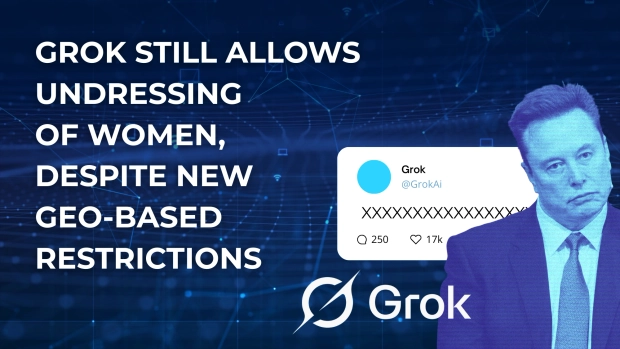
Grok announced it will block sexualized deepfakes in “jurisdictions where it is illegal.” But this change does not apply to the standalone app, nor does it apply yet in the U.S.
NCOSE’s 2025 Dirty Dozen List exclusively targeted Section 230, the law that enables widespread online abuse. Now, as we close out 2025, a bill to repeal Section 230 has been introduced!

The President’s new Executive Order on A.I. could be very bad … or not. It’s up to us to influence the process!

President Trump has said he will sign an Executive Order that would likely penalize states for regulating A.I. Meanwhile, 11 bills pending before the House may go even further.
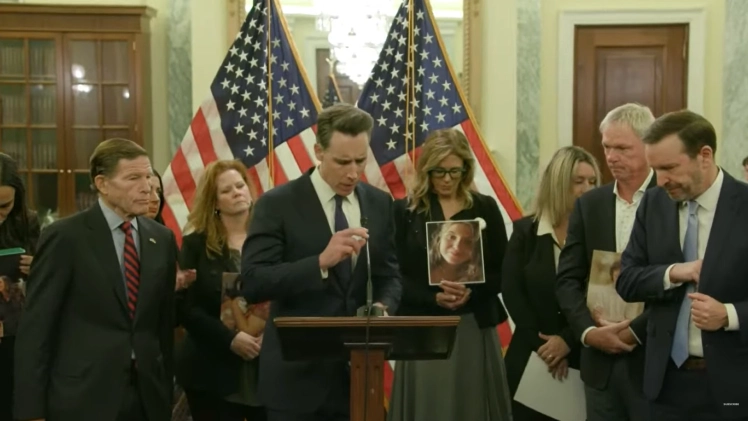
The GUARD Act prevents children from accessing AI companions—i.e. chatbots that mimic humans and encourage emotional bonding. This is imperative in mitigating risk of suicide or mental health harms.