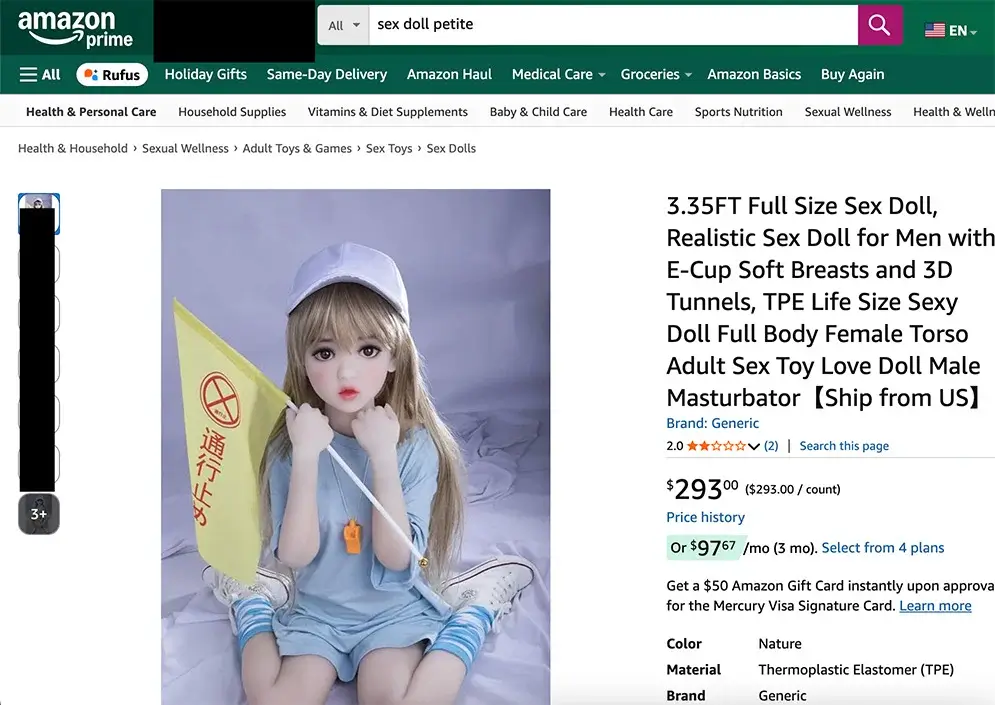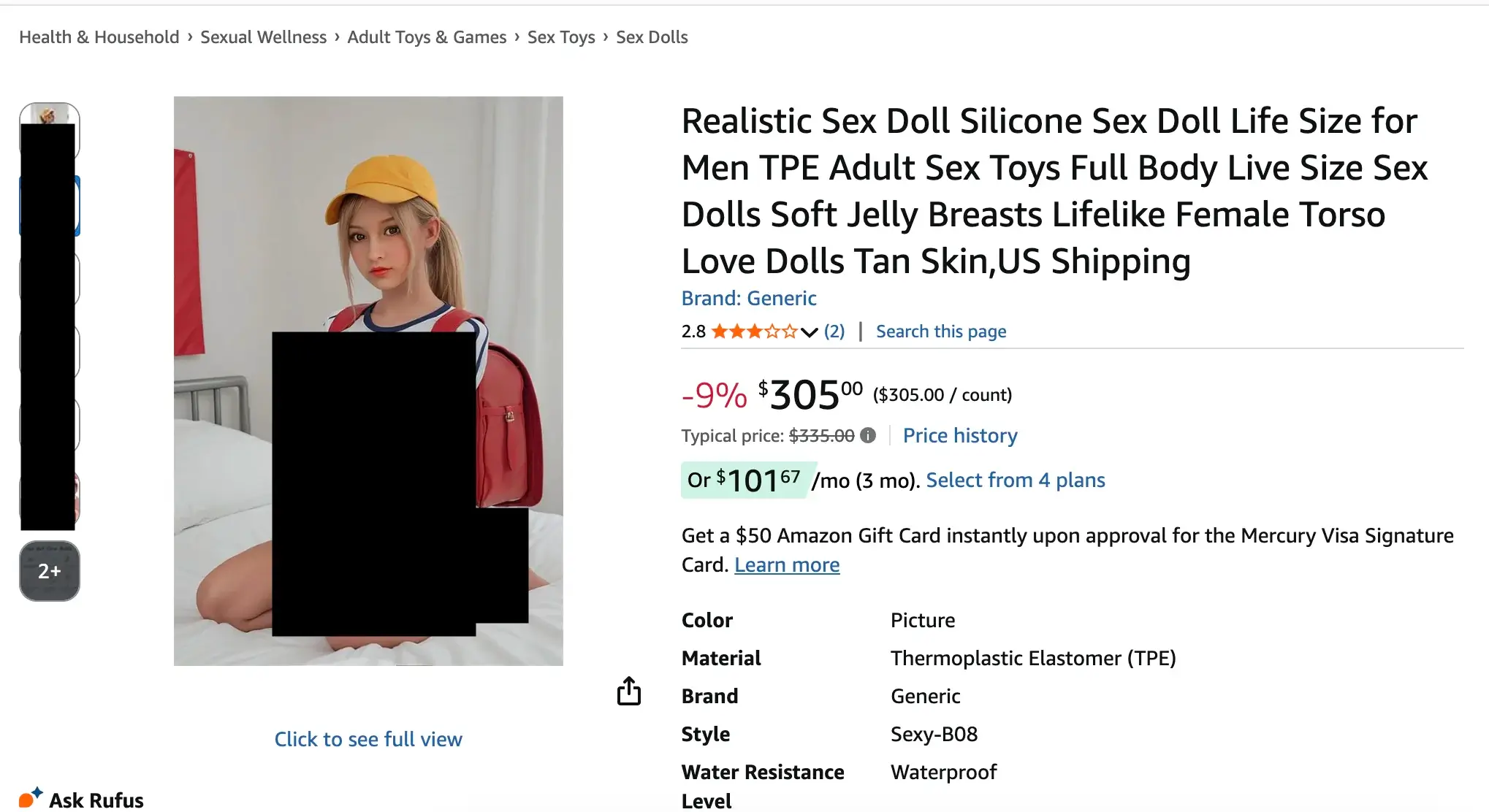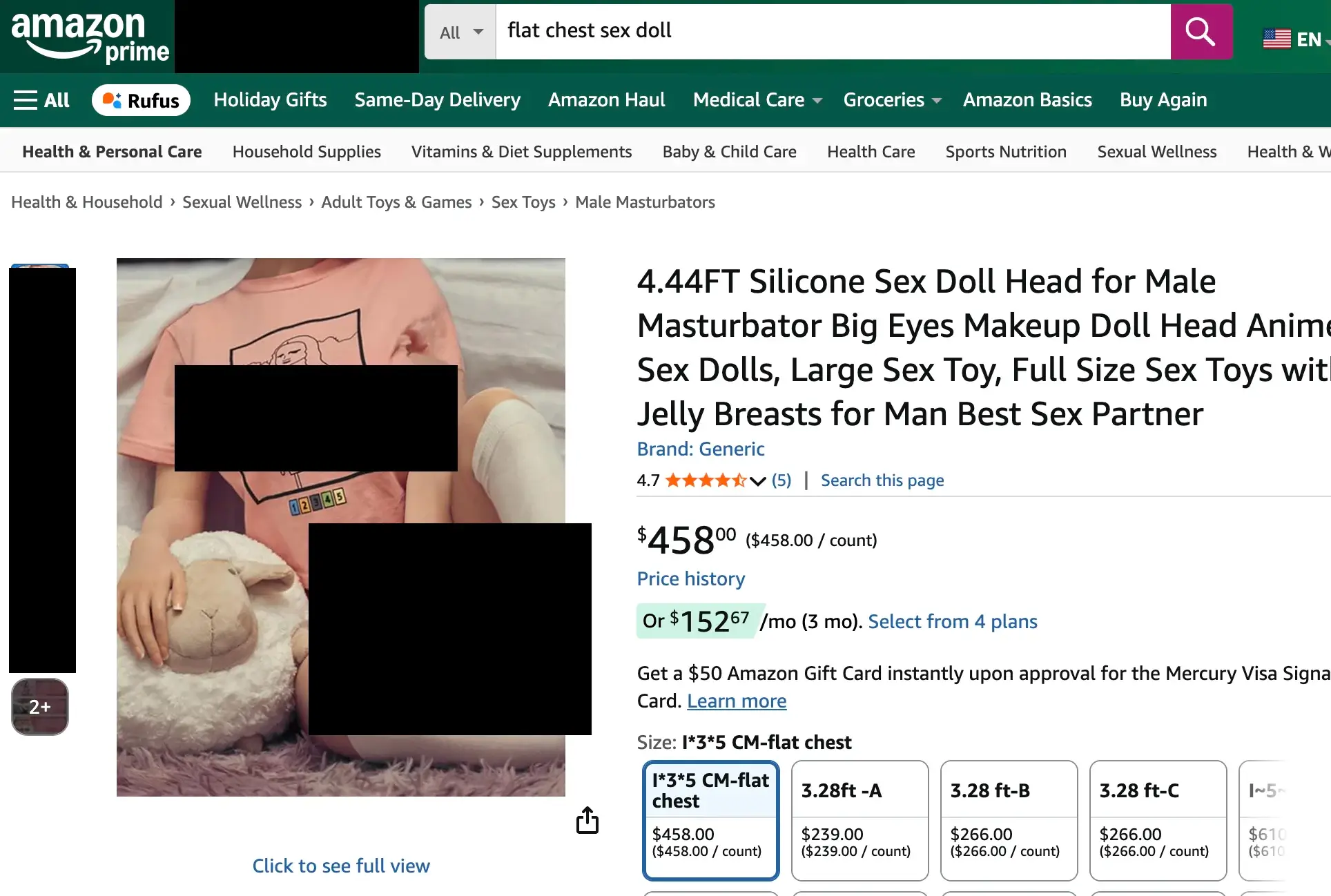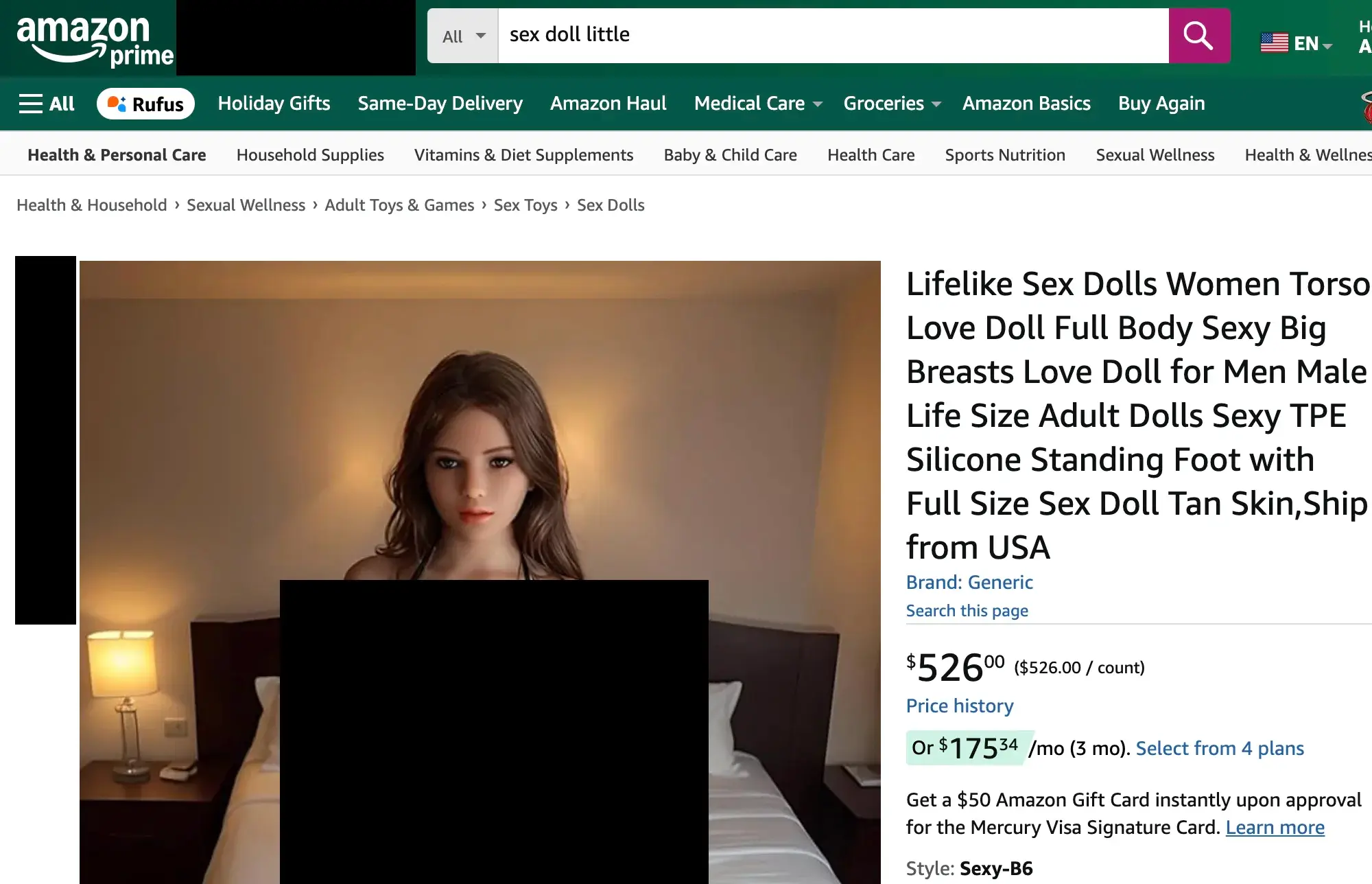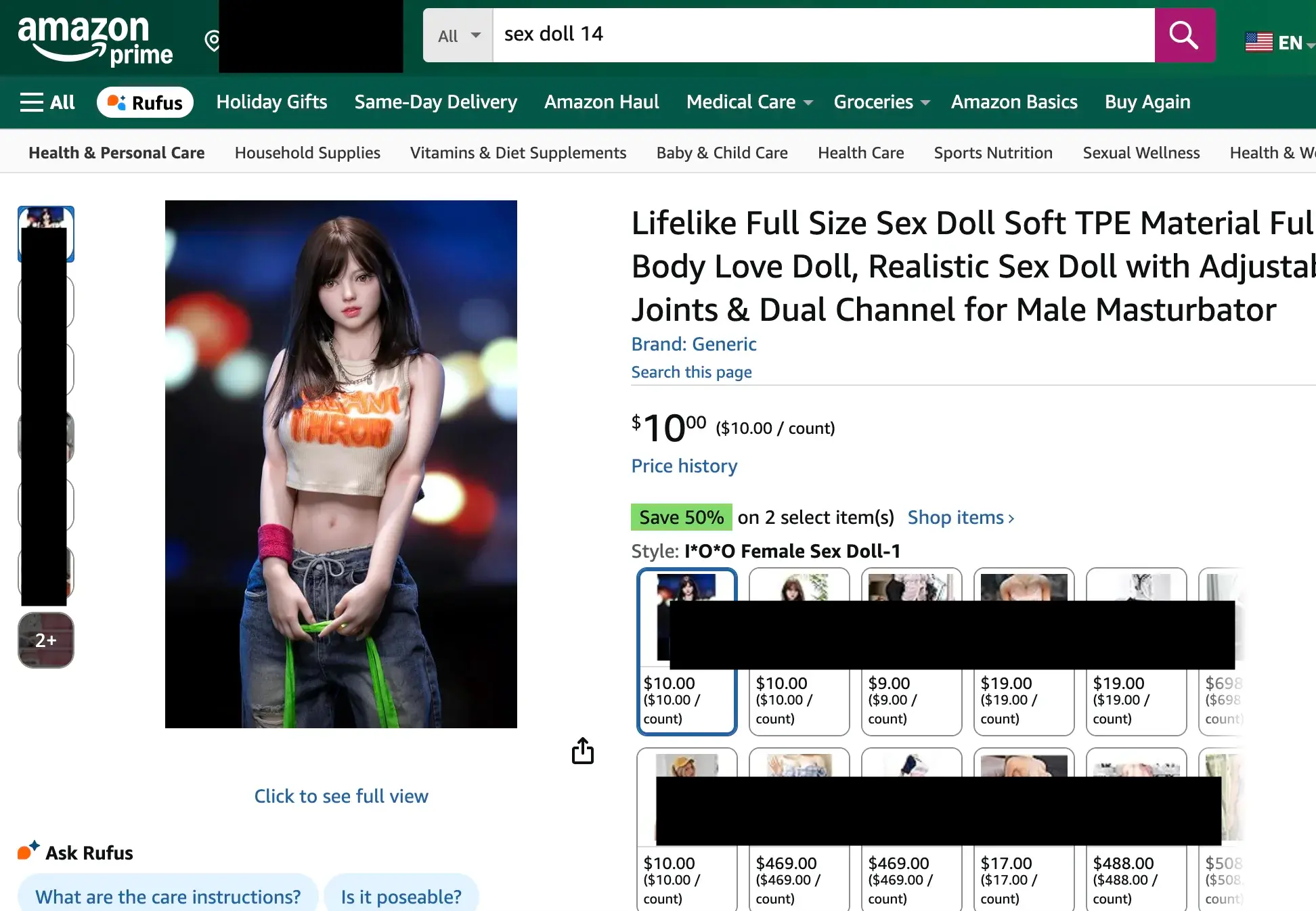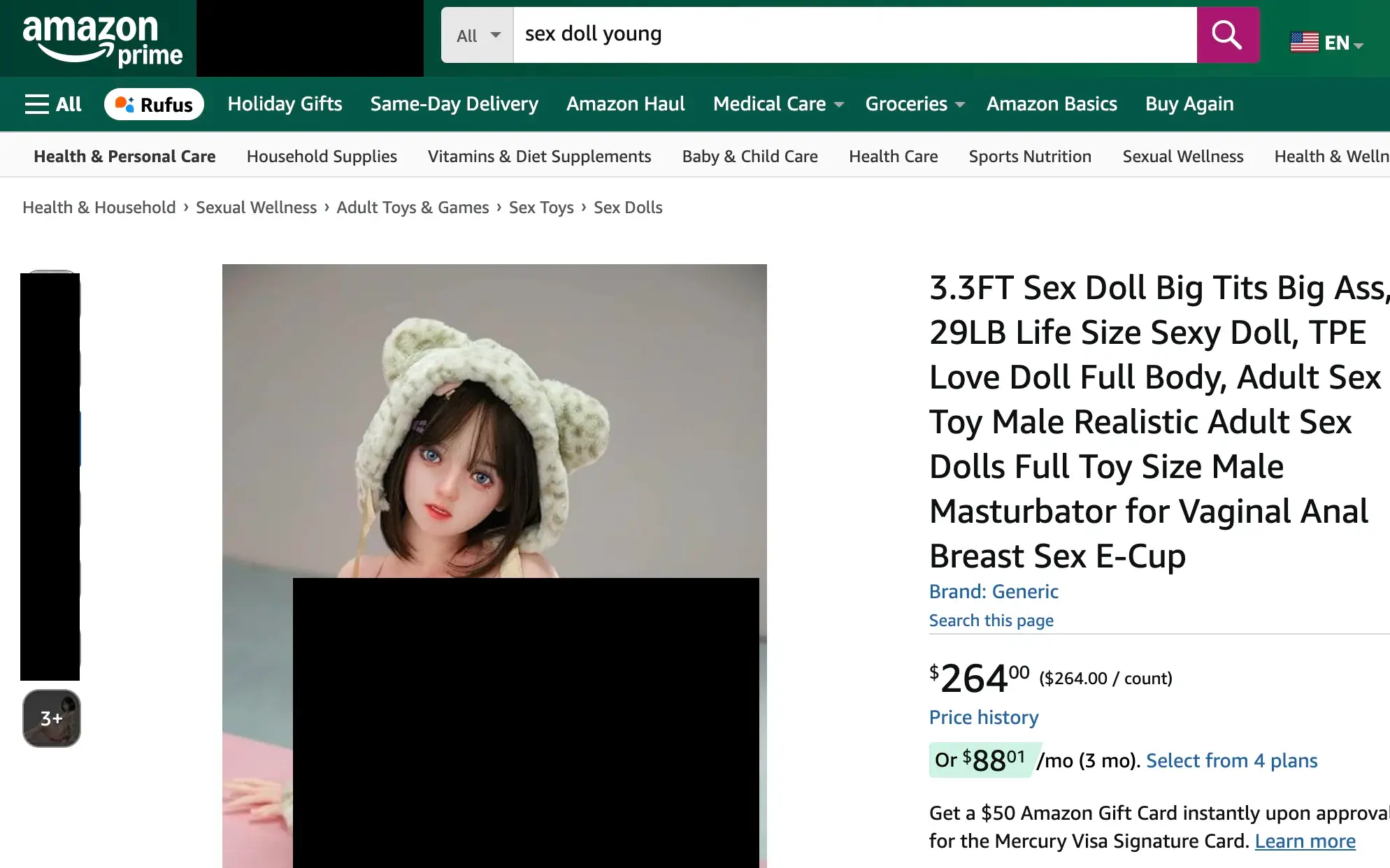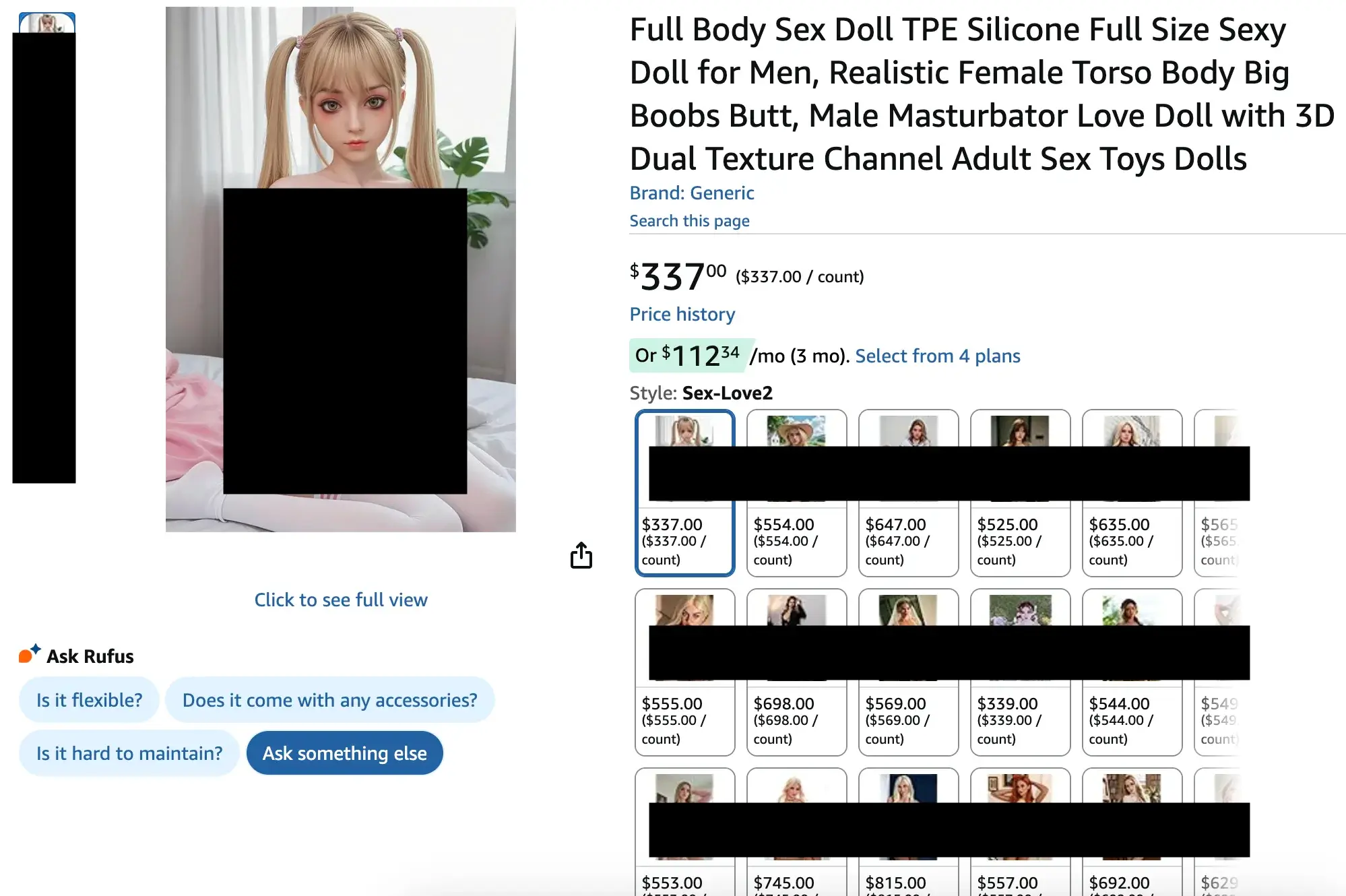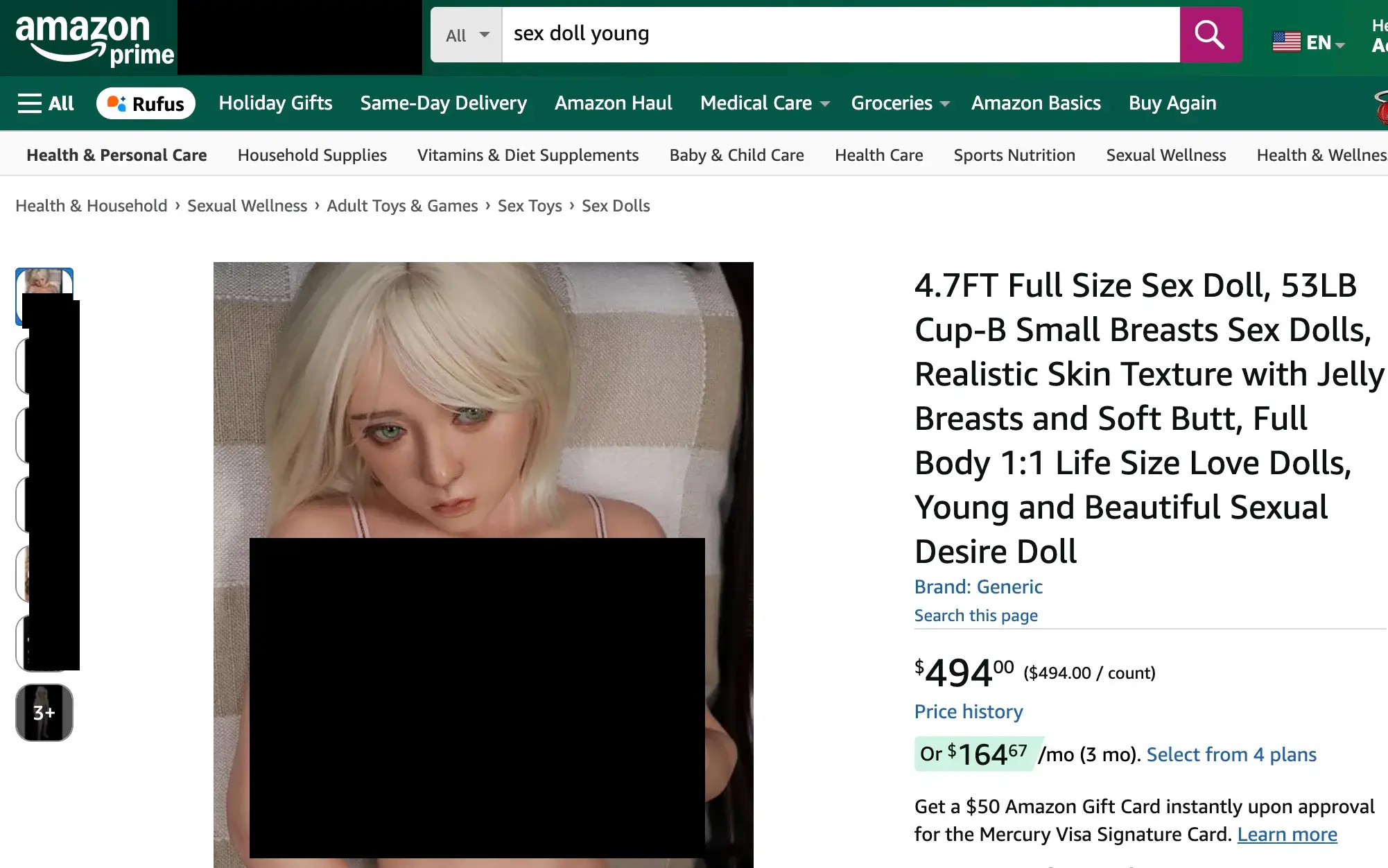





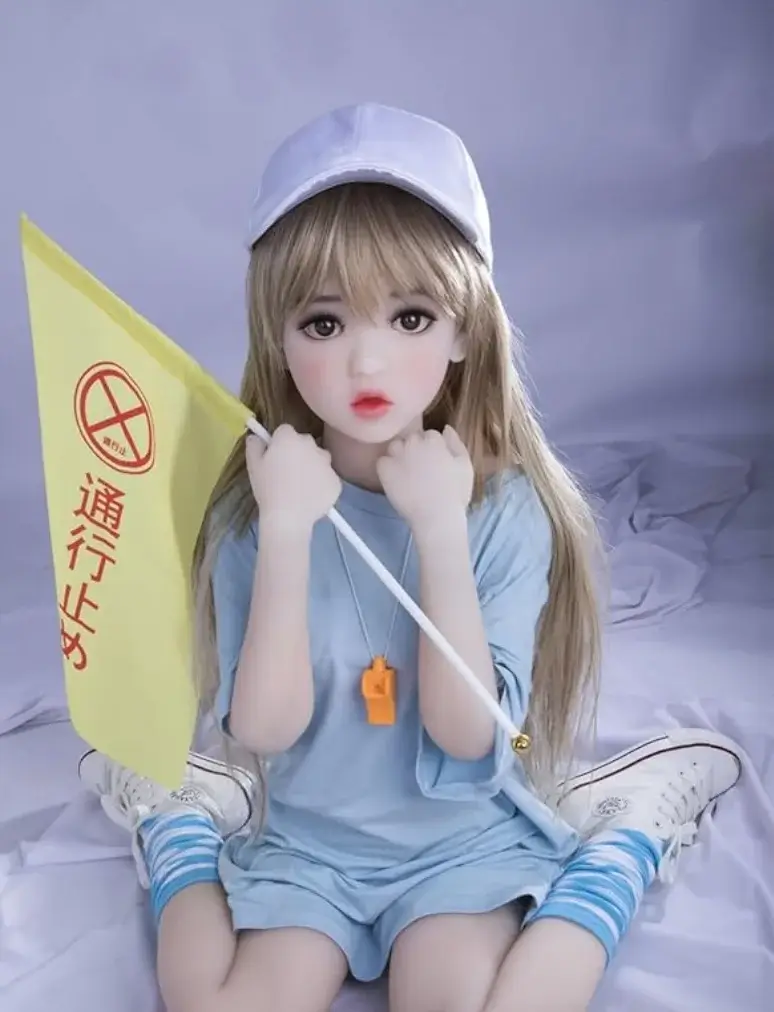

Despite advocates around the world calling out Amazon over the years, this company continues to host—and algorithmically surface—child-like sex dolls that violate its own policies, endanger children, and undermine laws across the United States and abroad. In a short searching session, a NCOSE researcher found over 20 sex dolls on Amazon with unmistakably child-like faces, clothing, body proportions, and marketing terms such as “young,” “petite,” “little,” or even “sex doll 14.” Some were posed with stuffed animals.
Tell Amazon to enforce its policies, comply with the law, and take real, measurable action to stop the sale of child-like sex dolls.
Despite advocates around the world calling out Amazon over the years, this company continues to host—and algorithmically surface—child-like sex dolls that violate its own policies, endanger children, and undermine laws across the United States and abroad.
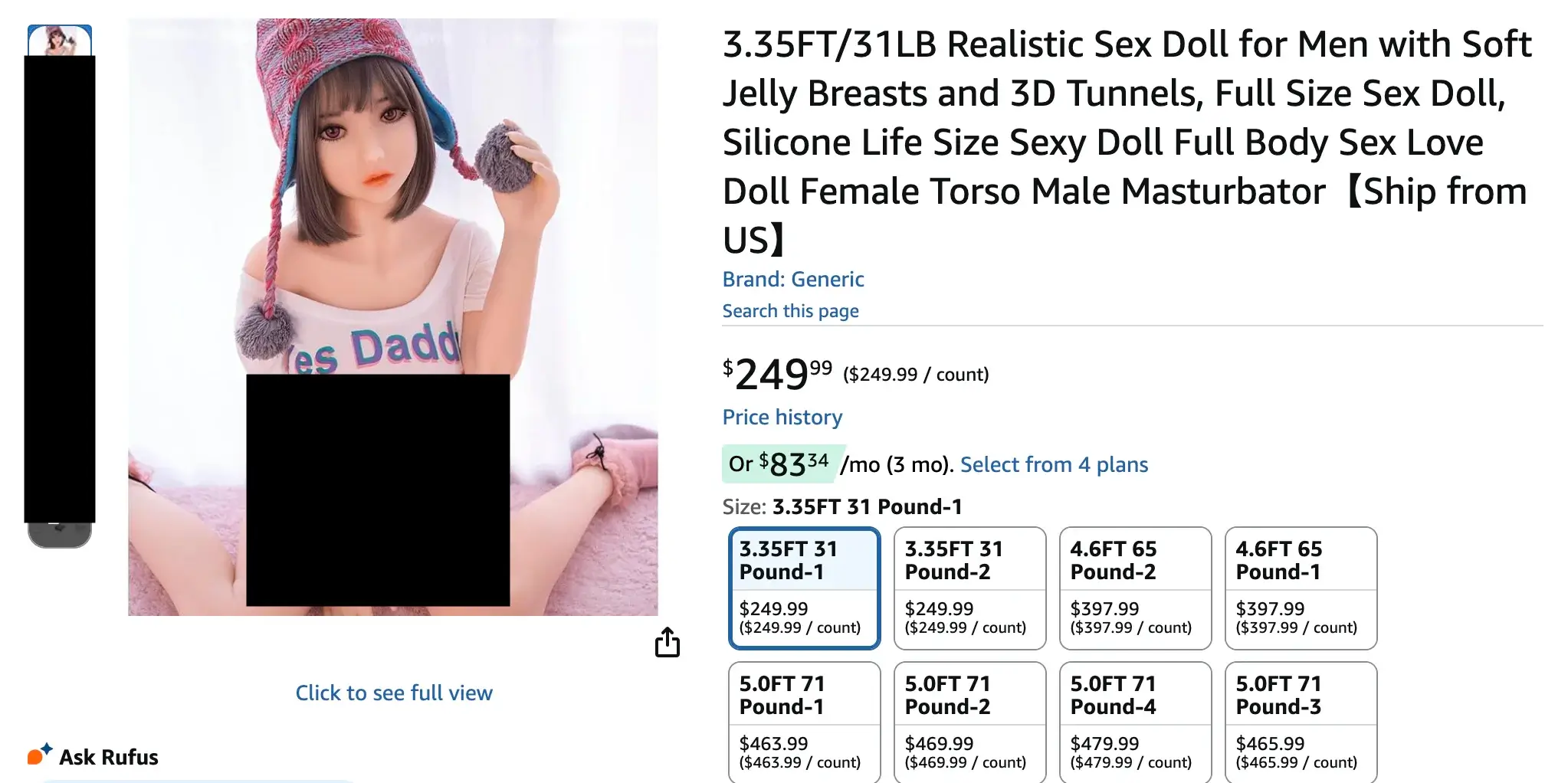
In a short searching session, a NCOSE researcher found over 20 sex dolls on Amazon with unmistakably child-like faces, clothing, body proportions, and marketing terms such as “young,” “petite,” “little,” or even “sex doll 14.” Some were posed with stuffed animals.
These were not ambiguous listings. They were clearly designed and advertised for sexual use—and they were easily discoverable through routine Amazon search terms. Amazon’s failure to detect or prevent these listings is not a small oversight; it is a systemic breakdown that enables sexual exploitation materials to flourish on one of the world’s largest retail platforms.
Amazon’s own rules prohibit “products portraying children or persons under 18 in a sexually suggestive or sexualized manner.” But when a retailer’s own search engine returns obviously child-like sex dolls it becomes clear that policy language means little without enforcement.
Amazon has a long history of reacting to pressure rather than proactively preventing the sale of exploitative sex dolls. Amazon was named to the Dirty Dozen List in 2017 and 2018, in part because of the sale of child-like sex dolls. After these years of advocacy, from thousands of supporters and activists in the UK, Australia, and in the US, Amazon temporarily stopped selling child-like sex dolls. In January 2021, only torso- or half-body dolls remained when checked by U.S. based NCOSE staff. But over time the lax enforcement led to the return of countless full bodied sex dolls of both adults and apparent minors. Too often, Amazon’s fixes are temporary and self-serving: the platform repeatedly allows harmful products to return, addressing the issue only when public scrutiny forces action rather than implementing lasting, systemic safeguards.
As child-safety experts have confirmed, offenders caught with child-like sex dolls are often already consuming child sexual abuse material—or harming children in real life. These dolls are not “harmless fantasies.” They are tools of rehearsal, desensitization, and escalation.
It’s time for Amazon to enforce its policies, comply with the law, and take real, measurable action to stop the sale of child-like sex dolls.
WARNING: Any pornographic images have been blurred, but are still suggestive. There may also be graphic text descriptions shown in these sections. POSSIBLE TRIGGER.
December 9, 2025, a NCOSE researcher discovered numerous sex dolls (20+) that had child-like features, dress, and marketing.
Some of these dolls appeared under searches like “sex doll 14” which resulted in a doll that appeared to be a young teen. Others related to search terms like “young” and “petite” and “little.”
Below is a limited sampling. Each one clearly was promoted as a tool for sexual gratification.
Amazon’s policies in the United States of America prohibit products portraying minors in a sexualized or sexually suggestive manner. The sex dolls in the above section are a clear violation of this policy, which indicates lax enforcement of this important child protection policy.
Products that portray children or persons under the age of 18 (or likely to be minors because of underage metadata indicators, such as underage setting, clothing, or lack of physical maturity) in a sexually suggestive or sexualized manner.
At least nine states have passed laws against child-like sex dolls.
If Amazon is allowing the sale of child-like sex dolls (as it appears to be doing) despite multiple states explicitly banning them, the implication is alarming: it means one of the world’s largest retailers is facilitating the distribution of items that lawmakers have identified as tools that normalize, encourage, or escalate sexual interest in children. Even if the sale is technically routed through third-party vendors, Amazon’s marketplace structure, search functions, and fulfillment systems can effectively override state protections by making these products easy to find, buy, and ship nationwide.
Allowing these items to remain for sale signals a profound failure of corporate responsibility, undermines state child-protection laws, and creates conditions where exploitative materials can circulate with impunity. In some states, mere possession is a crime, which begs the question, is Amazon the accomplice for this criminal act?
Note: Statutory language, definitions, and penalties differ.
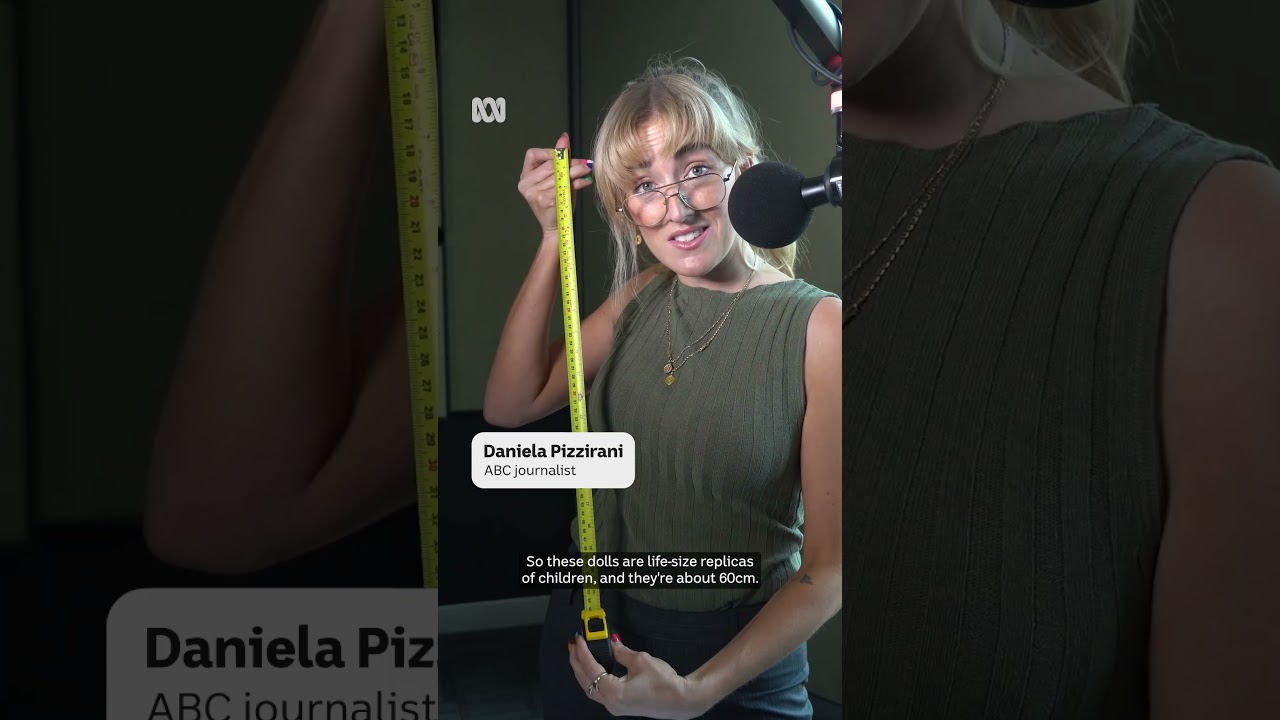
Australia has strong laws against child-like sex dolls. But a recent report described a “disturbing rise” in attempts to import child-like sex dolls into Australia, with 47 seized by Australian Border Force (ABF) between July 2024 and June 2025 as part of a nationwide crackdown.
Advocacy groups such as Collective Shout singled out Amazon (alongside other online retailers) for allowing such dolls to be offered for sale, arguing that large e-commerce platforms make these banned, exploitative items easily accessible.
Amazon responded by stating:
“We have strict policies and guidelines in the segment of adult products and we have always strictly prohibited child pornography,” the spokesperson said. “This includes having express policies prohibiting the sale of sex dolls with childlike appearances, which all third-party sellers on our store must follow.
We continuously monitor our store, and if we discover a product was undetected by our manual and automated checks, we address the issue immediately and refine our controls. Third-party sellers who don’t comply with Amazon policies and guidelines will be subject to action including removal of their account.”
However, Collective Shout argued that the fact these dolls surfaced at all — and required a major border crackdown — demonstrates that online retail platforms remain a weak point in preventing the importation and distribution of harmful, illegal items.
Shortly after the media report, Collective Shout reported: “A spokesperson for Amazon told news.com.au they had removed the dolls and had strong policies prohibiting child abuse material. But they’re still there – and we’ve discovered new listings just today. Campaigns Manager @itscaitlinroper posted an image of one such doll alongside customer reviews on X, tagging @amazon CEO @ajassy Andy Jassy and asking what he was doing about it. She was immediately blocked. They can’t claim they didn’t know.”
Child-like sex dolls are not harmless objects or neutral “fantasy outlets.” Research and law-enforcement reports both show they reinforce or escalate dangerous sexual interest in children, not reduce it.
A paper from the Australian Institute of Criminology noted “There is no evidence that child sex dolls have a therapeutic benefit in preventing child sexual abuse.” In fact, the report highlights that such dolls risk reinforcing cognitive distortions — the beliefs offenders use to justify viewing or acting on sexual interest in children — and may normalize harmful fantasies rather than mitigate them.
Experts who work directly with offenders and victims have seen this play out in practice. Kritsi McVee, a former police detective and specialist child interviewer, described encountering child-like sex dolls in cases with child abusers. She stated:
“During my time as a child abuse detective, I encountered childlike sex dolls in the possession of offenders who were already consuming child sexual abuse material or had directly harmed children. These dolls weren’t harmless ‘fantasy aids’; they were part of a pattern — tools used to rehearse, reinforce and justify dangerous sexual interests in children. They serve to desensitise offenders, feeding an escalation towards real-world abuse. It was never an innocent, stand-alone behaviour or a ‘preference’; it was always part of a bigger, darker picture of risk…”
Amazon must take these matters seriously. No mainstream corporation should promote these obviously deviant and harmful, and at times illegal, materials.
Support groups modeled after the 12-step program framework of Alcoholics Anonymous will offer some help to overcoming compulsive sexual behavior: Sex Addicts Anonymous, Sex and Love Addicts Anonymous, and Sexual Compulsives Anonymous.
International Institute for Trauma and Addiction Professionals (IITAP) – A database to find local sex addiction therapists, support groups, 12-step programs, and sex addiction treatment options. They also provide educational materials to understand sex addiction.
Join related campaigns at Collective Shout
Spread the word to hold Big Tech accountable. Use these free resources to post on social media or share via email. Your voice can create change!
We use cookies
We use necessary cookies to make this site work and, with your consent, analytics and advertising cookies to understand usage and improve marketing. You can accept all, choose necessary only, or reopen your choices later. Privacy policy