The 2026 Lame Duck session is upon us! This meeting of Congress, held after the November elections but before the newly elected Congress is seated, is often mistaken as an inefficacious time when little progress is made. In fact, the exact opposite is true.
In NCOSE’s experience, sometimes the biggest and most rapidly paced legislative victories occur during the Lame Duck session. So, our Public Policy team will be drilling down on seven high-priority bills that we have a good chance of passing before Christmas.
From strengthening protections for exploited children to holding technology companies accountable for facilitating sexual exploitation, these seven bills represent important opportunities to advance meaningful protections for vulnerable individuals.
1. Kids Online Safety Act: Establishing a Duty of Care to Protect Children Online
The Kids Online Safety Act (S. 1748) is the most comprehensive child protection bill currently pending before Congress.
The Senate version of KOSA (S.1748) establishes a legally actionable Duty of Care that requires tech companies to take reasonable care to avoid designing products in a way that causes foreseeable harms to children.
It also requires that the strongest safety settings be on by default for children. This is crucial given that most people leave devices and platforms at their default settings, resulting in countless children being put in harm’s way.
Further, KOSA gives child users the ability to opt out of addictive product features such as personalized algorithmic recommendations. It would require independent audits and research to examine how online platforms are affecting kids.
2. Stop CSAM Act: Holding Technology Companies Accountable for Child Sexual Abuse Material
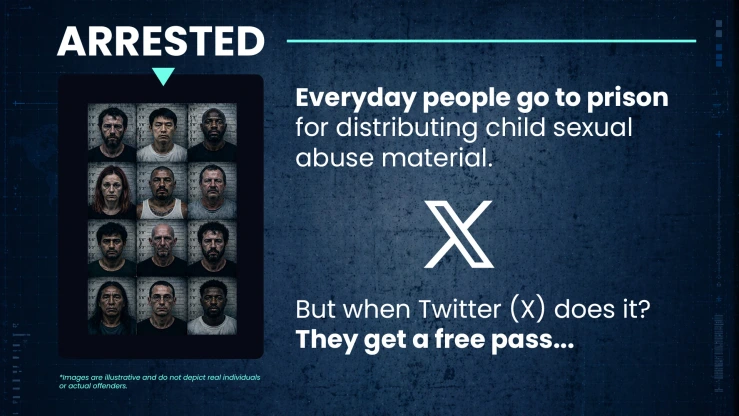
When individuals possess and distribute child sexual abuse material (CSAM, the more apt word for “child pornography”), they go to jail. Yet when tech companies do it—even with full knowledge—they get a free pass.
This disturbing double standard was affirmed in the NCOSE Law Center’s lawsuit against Twitter, in which we represent two child sex trafficking survivors whose CSAM was distributed on Twitter. The platform confirmed in writing that it had reviewed the reported CSAM and chose not to take it down. Yet the Ninth Circuit Court of Appeals ruled that Section 230 of the Communications Decency Act gave Twitter immunity for knowingly possessing and distributing CSAM.
This is why the STOP CSAM Act (S. 1829 / H.R. 3921) is so important. The bill clarifies that Section 230 does not give tech companies immunity for intentionally, knowingly, or recklessly promoting, storing, or making CSAM available.
Further, STOP CSAM would strengthen reporting requirements by removing companies’ discretion over what CSAM they report and introducing penalties for failing to report it. It would also require technology companies to publish annual transparency reports detailing efforts to combat CSAM.
STOP CSAM also includes important measures to strengthen protections for child survivors participating in court proceedings and improves the restitution process.
3. DEFIANCE Act: Giving Survivors of Deepfake Pornography a Path to Justice
Artificial intelligence has made it increasingly easy to create realistic images and videos depicting people in sexually explicit situations they never participated in. Commonly called “deepfake pornography,” this is a heinous form of image-based sexual abuse (IBSA).
The DEFIANCE Act (S. 1837 / H.R. 3562) would make it possible for survivors of AI-generated IBSA/deepfake pornography to sue their perpetrators. Under the legislation, survivors could sue those who produce or possess deepfake pornography of them with the intent to distribute the images, as well as those who produce, distribute, or solicit such images.
The bill would also establish a 10-year statute of limitations, meaning survivors of IBSA could sue up to 10 years after discovering the violation, or 10 years after the survivor turns 18, whichever occurs later.
The DEFIANCE Act passed the Senate in January 2026 so must be approved by the House.
4. Frederick Douglass Trafficking Victims Prevention: Funding for Critical Anti-Trafficking Program
The Frederick Douglass Trafficking Victims Prevention and Protection Reauthorization Act (H.R. 1144) would renew federal funding for important anti-trafficking programs, authorize emergency housing for trafficking survivors, and expand youth education on this terrible crime.
The legislation would authorize five years of annual grants supporting anti-trafficking programs in the US and abroad, administered through federal agencies including Departments of Health and Human Services, Justice, Labor, and State. It would also extend funding under International Megan’s Law, which requires sex offenders to disclose information about international travel plans.
5. SCREEN Act: Protecting Children from Online Pornography
In the offline world, we have laws prohibiting the sale of pornographic material to a minor. Every brick-and-mortar pornography vendor must verify a person’s age before selling them pornography. However, the online world has not been held to this same standard. The same child who gets turned away when trying to buy a pornographic magazine can easily pull out his phone and immediately access countless pornographic websites.
The SCREEN Act (S. 737 / H.R. 1623) would fix this bizarre double standard. Under the SCREEN Act, commercial pornography websites must implement age-verification technology to prevent children from accessing their content. Crucially, the legislation establishes specific standards for efficacy and privacy protection.
NCOSE helped draft The SCREEN Act with Senator Mike Lee’s office in 2022. We’re thrilled to see it finally gaining bipartisan momentum. The House of Representatives passed the bill in June as part of a child protection package.
6. Kayleigh’s Law: Strengthening Long-Term Protections for Survivors
Kayleigh’s Law (H.R. 8481) would strengthen protections for survivors of federal violent and sexual crimes by allowing courts to impose lifetime no-contact orders at sentencing when requested by the survivor or the government. Importantly, this would spare survivors from having to return to court and repeatedly seek renewed protection after an offender’s release. The legislation also recognizes that circumstances can change over time, allowing survivors to petition the court to modify an order when necessary.
Kayleigh’s Law is named for Kayleigh Kozak, a survivor of child sexual abuse forced into repeated court exposure to the man who exploited her. She now works on behalf of other victims at the America First Policy Institute.
This is an important step toward ensuring that survivors’ safety and peace of mind remain a priority long after a criminal case has concluded.
7. HAILEY Act: Expanding AMBER Alerts to Protect More Missing Children
When a child goes missing under dangerous circumstances, every minute matters. Yet existing AMBER Alert eligibility requirements exclude certain children whose disappearance involves serious risk factors.
The HAILEY Act (H.R. 9236) would address this gap by expanding AMBER Alert eligibility to include children who are missing and face a credible threat of serious bodily injury or death.
The Act is named after Indiana teenager Hailey Buzbee, who was groomed on Roblox by an adult predator who lured her to meet in real life and then murdered her. Because law enforcement did not confirm that Hailey’s disappearance was an abduction, no Amber Alert was issued.
By broadening the circumstances in which an alert can be issued, the Hailey Act can ensure that more children receive help during the critical first hours of disappearance.
The Lame Duck Session Is an Opportunity We Cannot Afford to Miss
Taken together, these seven bills address some of the most pressing issues facing survivors of sex trafficking, image based sexual abuse, and child sexual abuse material. They are bills that we have a real chance of passing before the Lame Duck session closes!
For that to happen, we need your voice. Please TAKE ACTION NOW, calling on your congressional representatives to support these seven bills!