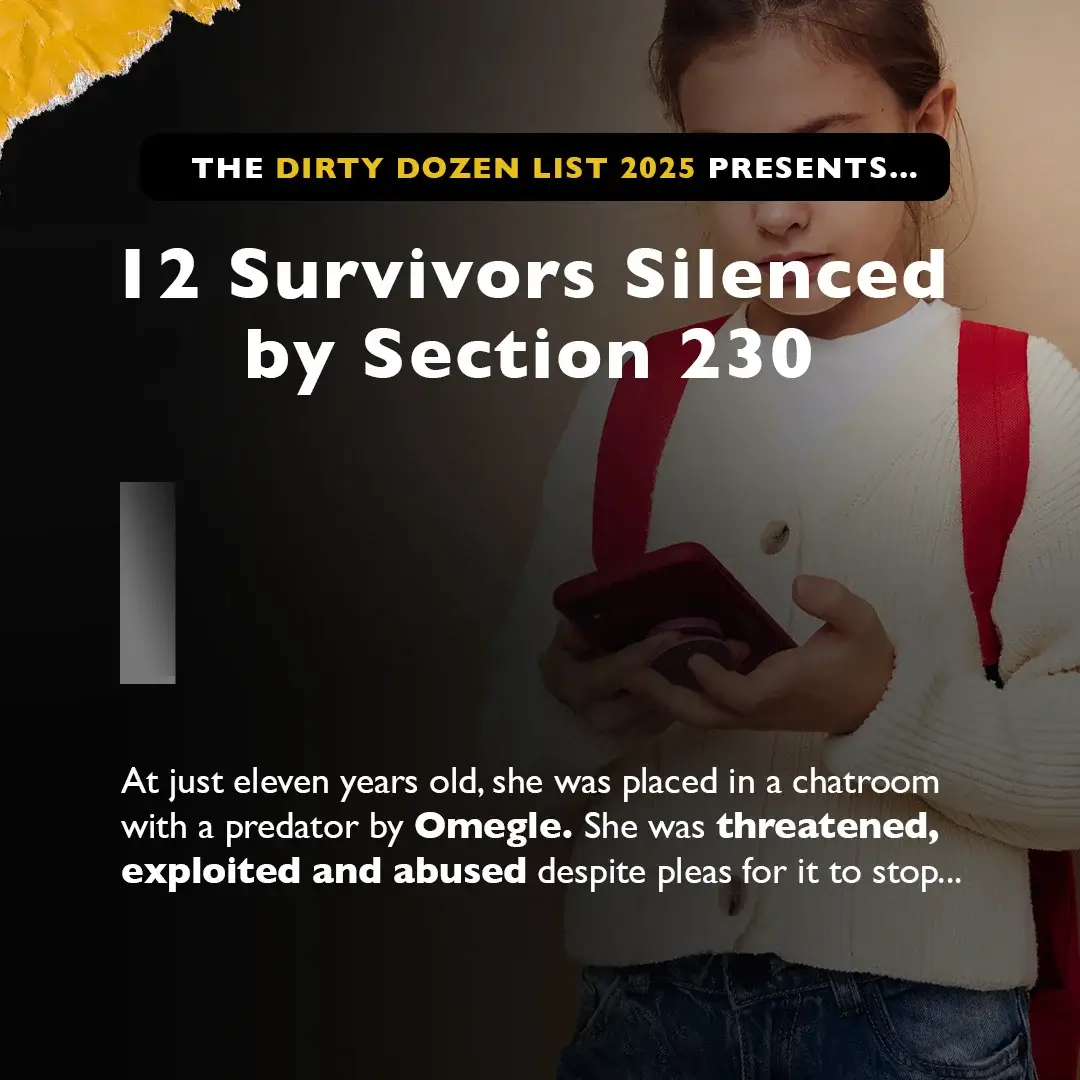
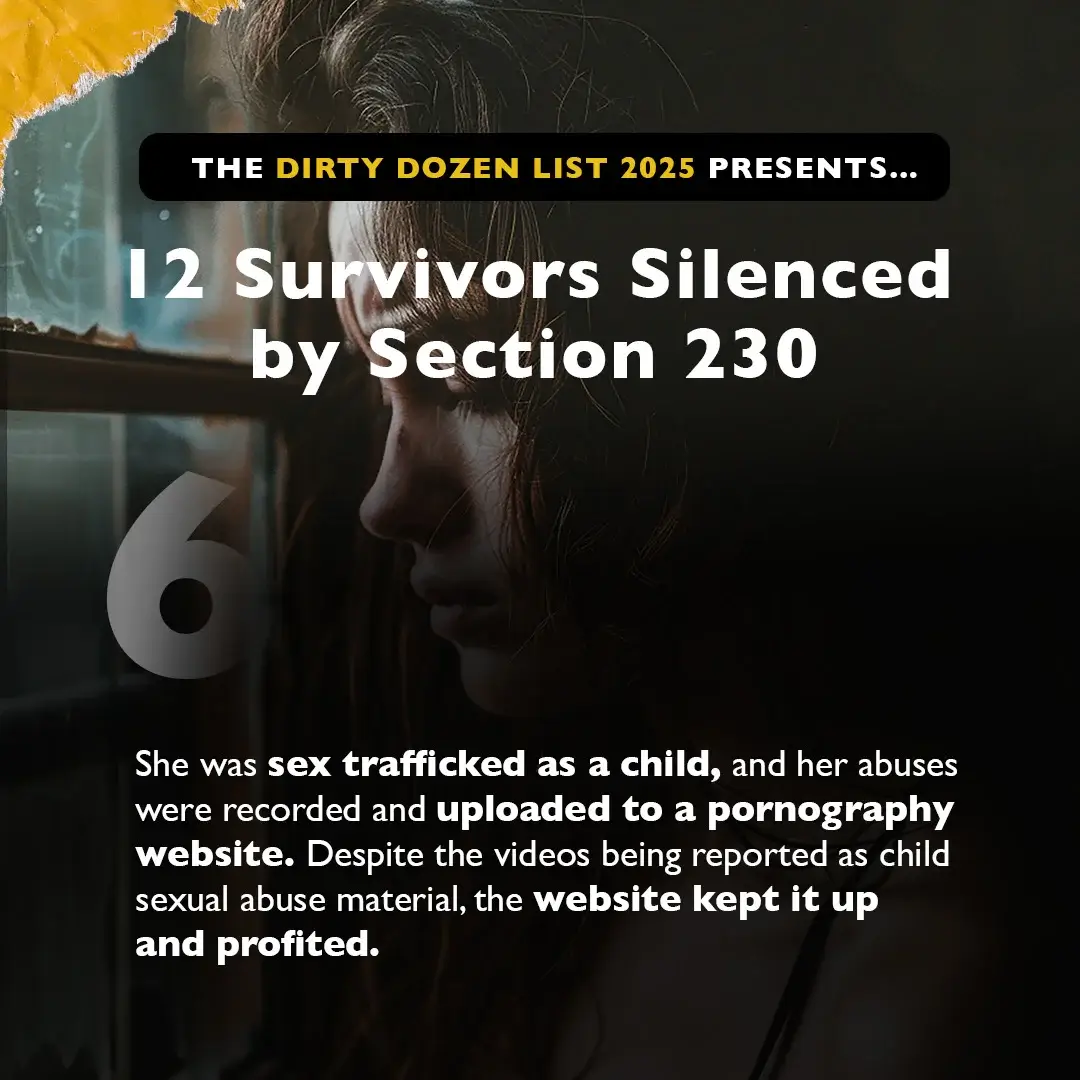
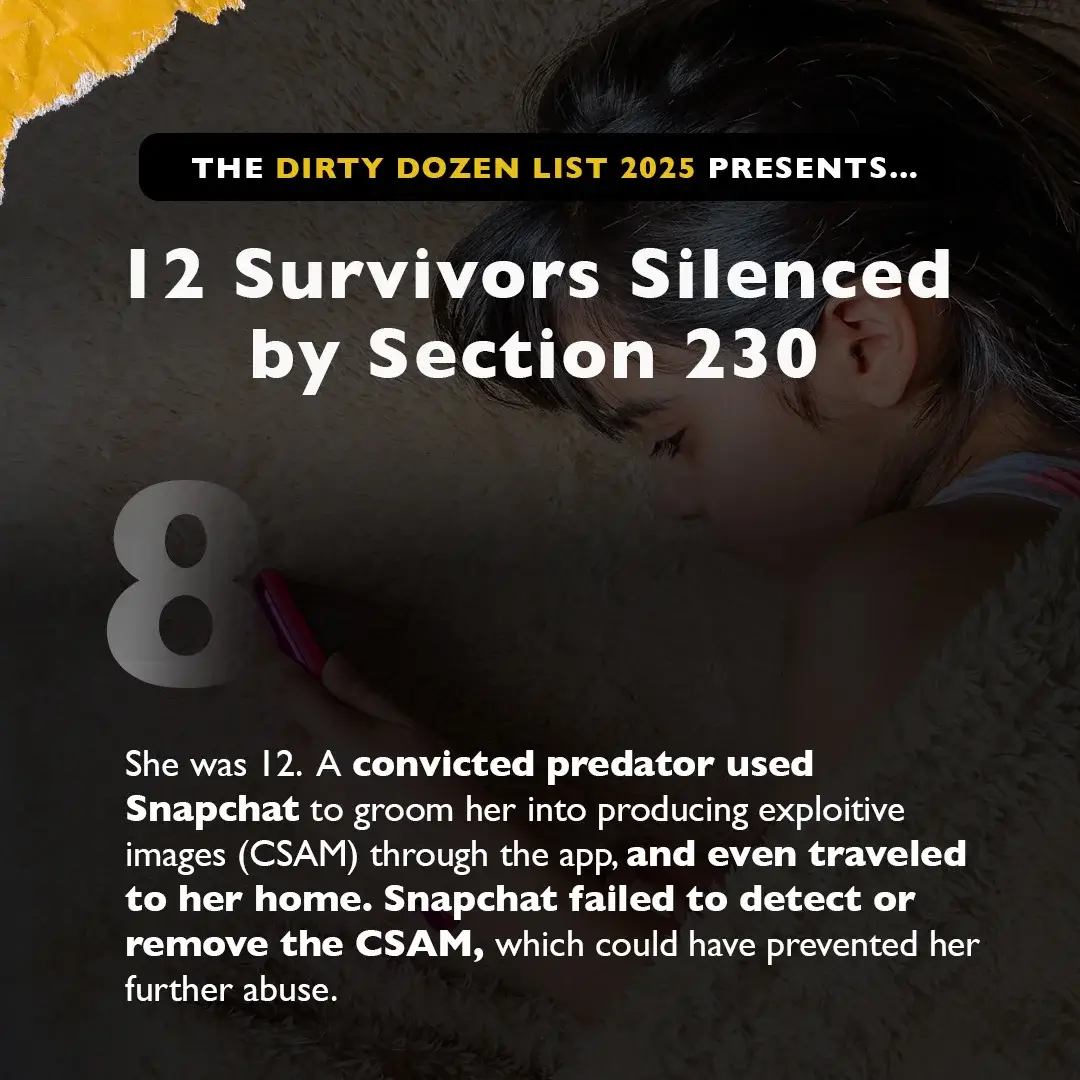
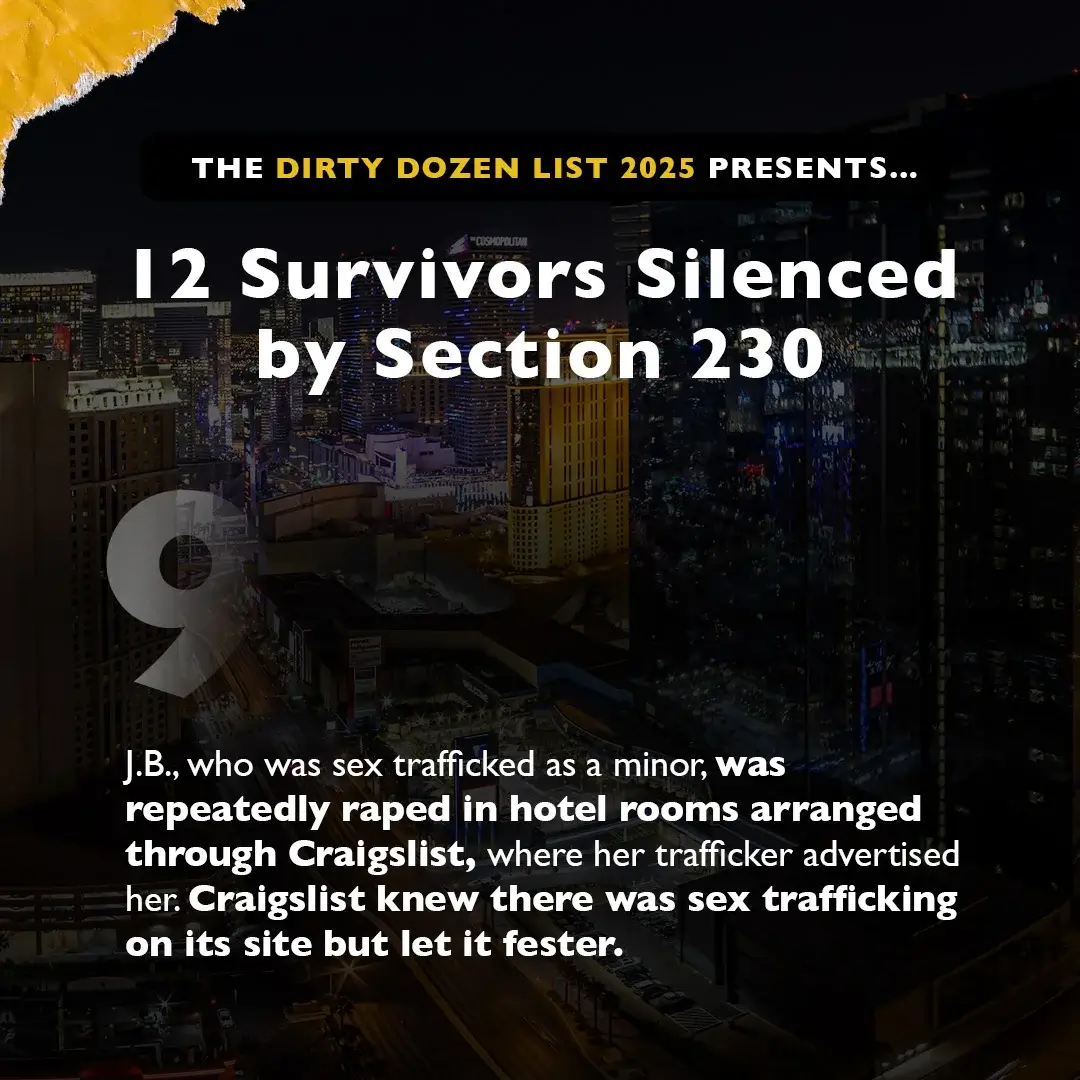
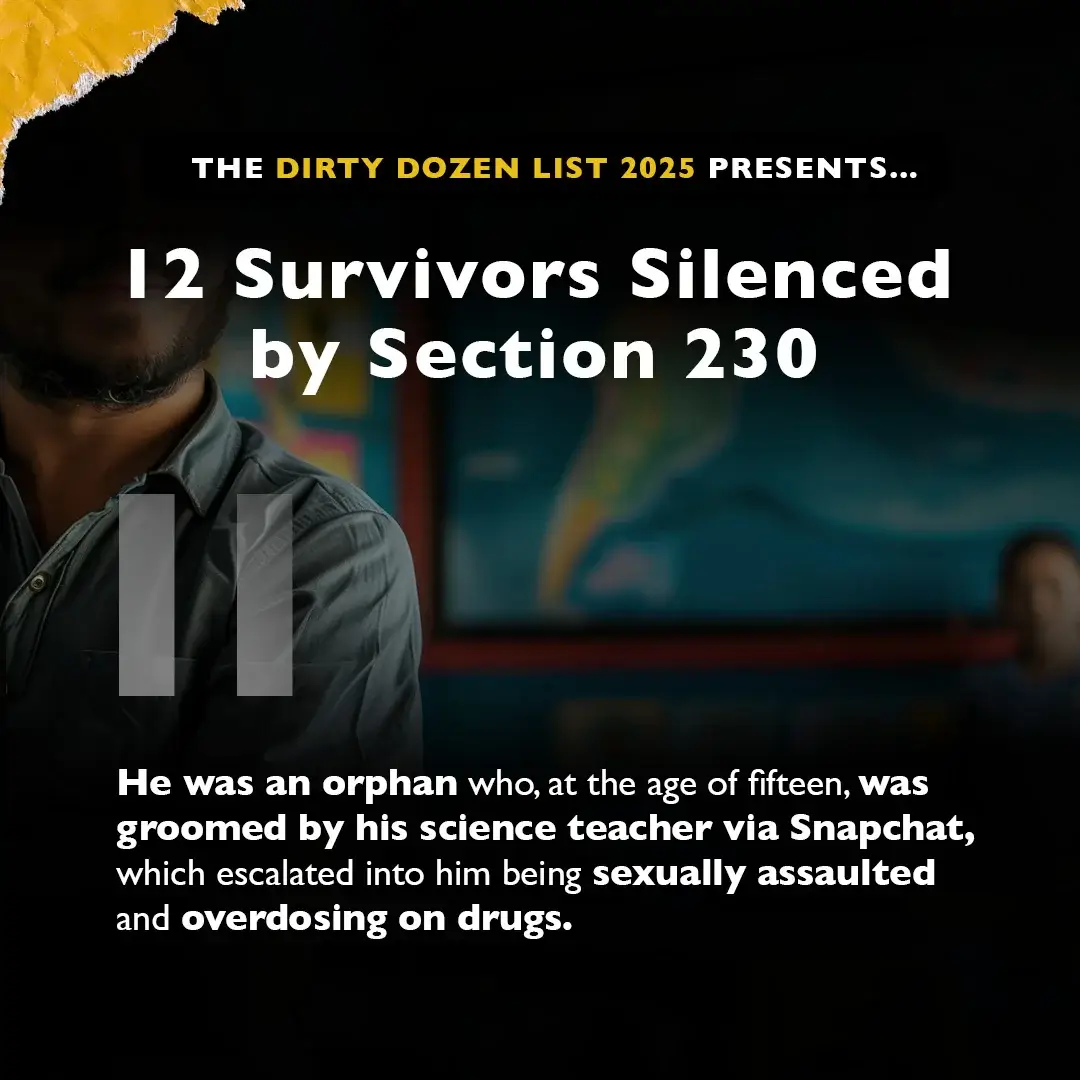
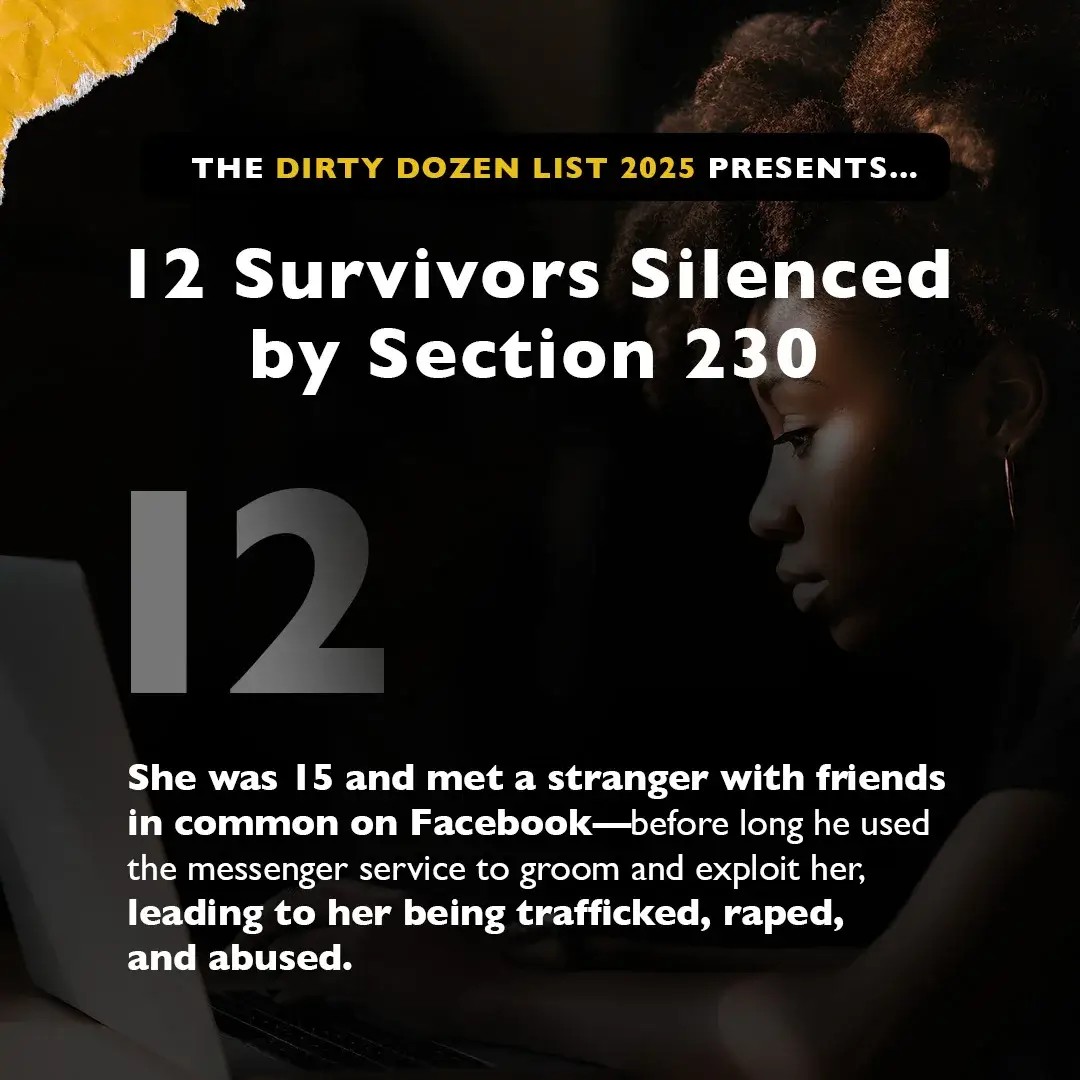
Omegle, an app that randomly paired users with strangers in video chat rooms, paired an 11-year-old girl with an adult man. The man threatened to hack the girl’s personal devices if she did not remove her clothes and perform sexual acts for him on camera. Terrified, she complied as the predator took screenshots.
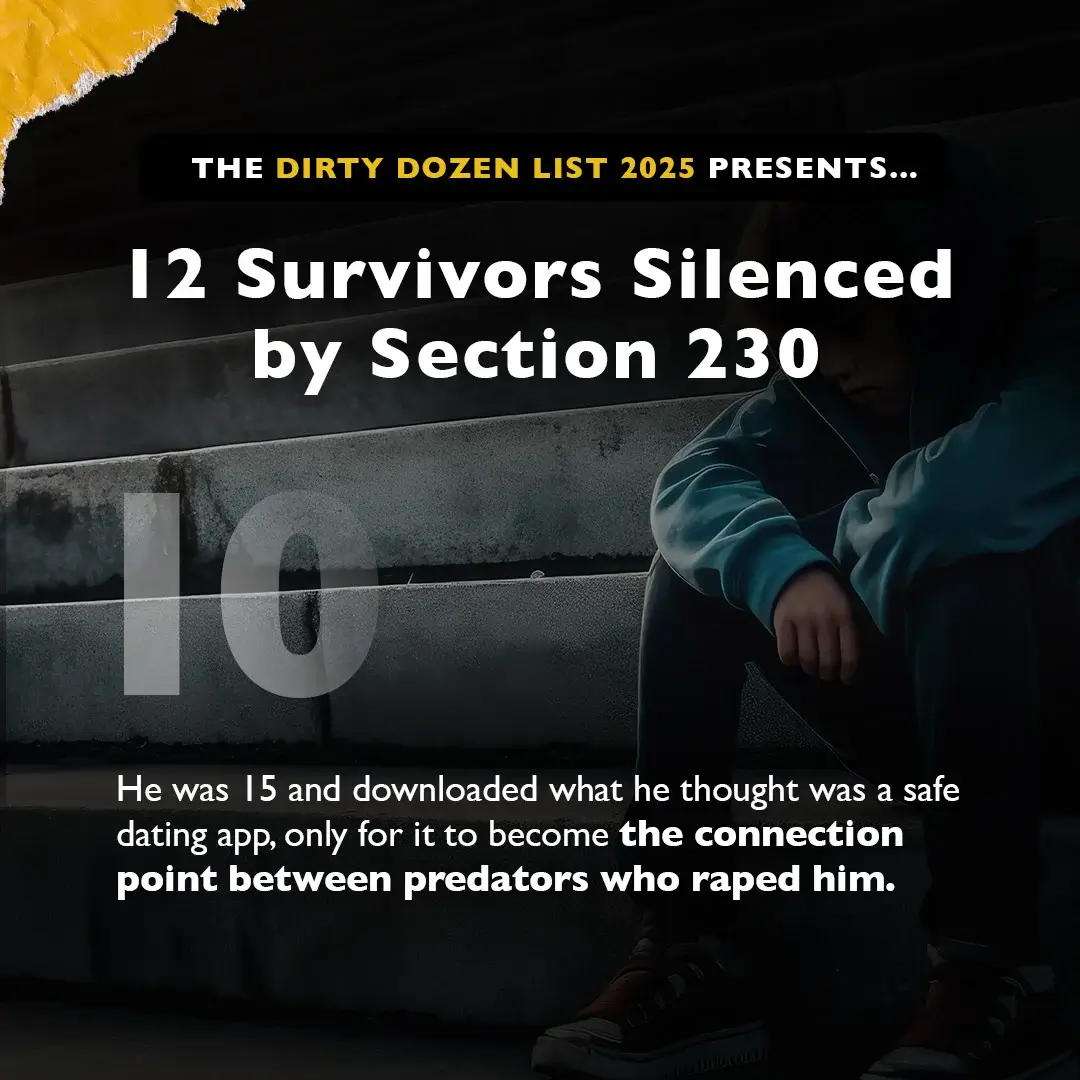
Grindr, an 18+ dating app, welcomed a 15-year-old boy onto the platform without verifying his age. The app then connected the boy with adult predators who raped him.
Pornhub and xHamster, mainstream pornography websites, actively encouraged nonconsensual voyeur videos. They promoted tags like “hidden camera,” “voyeur,” and “spycam,” and even had a separate webpage dedicated to this content. When voyeur videos of 10 women showering and changing were uploaded to the sites, Pornhub and xHamster monetized and distributed them.
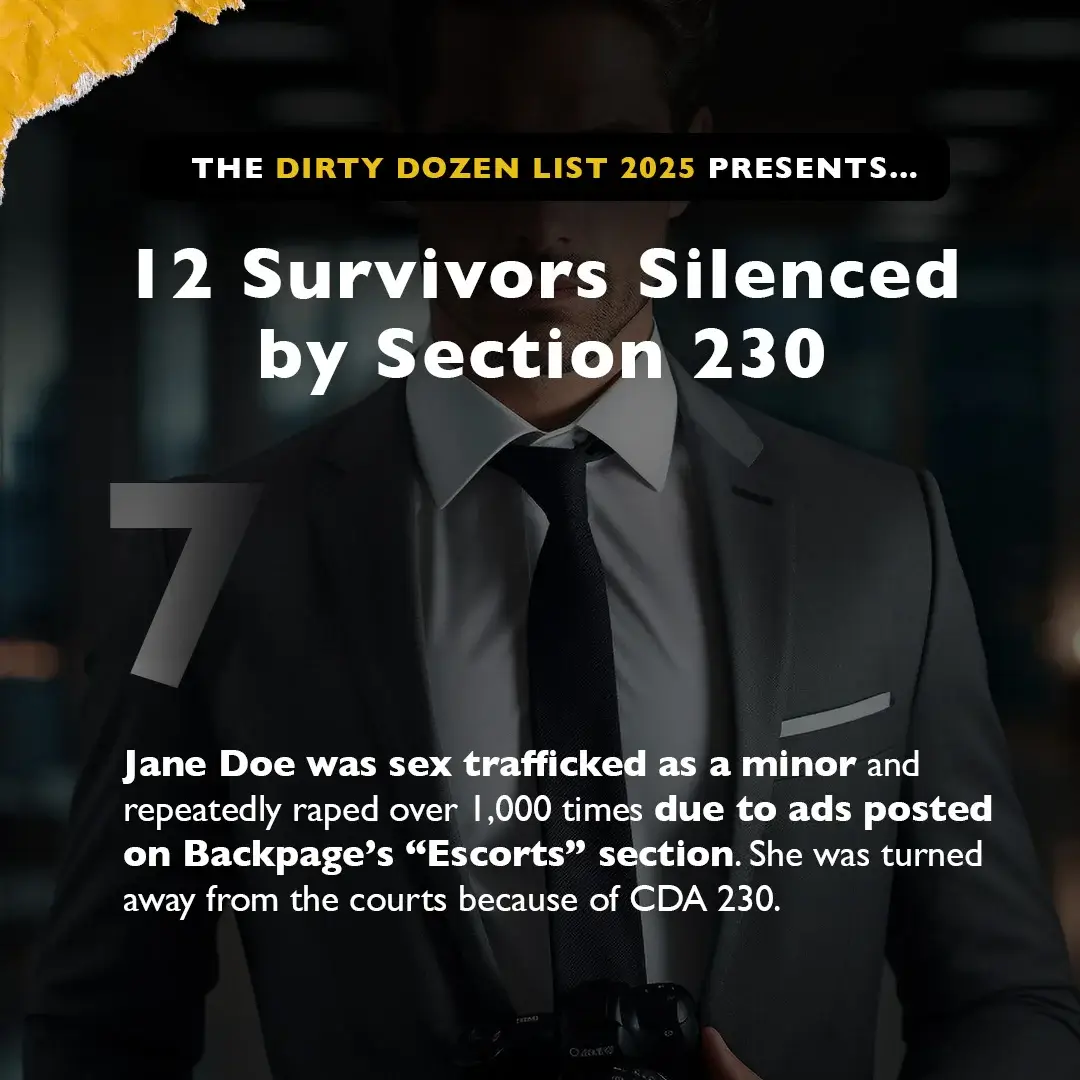
In all of these cases, tech platforms have actively facilitated the sexual abuse of these individuals. Yet when the exploited individuals brought lawsuits against tech companies that facilitated their abuse, their lawsuits were dismissed under Section 230 of the Communications Decency Act.
Section 230 has long shielded tech giants from responsibility when their products cause harm. It states that tech companies are not liable for content posted by third parties—but overtime, court interpretations of this law have expanded far past merely immunizing tech companies for the passive hosting third-party content. Now, tech companies have been immunized from liability even when their algorithms and design features play a very active role in harming individuals.
This immunity enables vast amounts of exploitation. Tech executives have little to no motivation to stop abusive behaviors when it brings them profit and they can’t be sued for it.
This is why, with you at our side, we have long pushed for Section 230 to be repealed. And now, thanks to YOUR unrelenting advocacy, Congress is finally listening!
Senator Lindsey Graham (R-SC) and Senator Richard Durbin (D-IL) introduced the Sunset Section 230 Act. And the bill is simple: it repeals Section 230 and remove wherever it is referenced in other sections of the U.S. code. The term “sunset” means the bill will become effective after a period of time—in this case, two years after it’s enacted into law.
This is a MASSIVE Dirty Dozen List Victory!
Section 230 of the Communications Decency Act was the sole target of our 2025 Dirty Dozen List campaign. Why? Because this law alone allows countless tech companies to get away with facilitating the sexual abuse and exploitation of users on their platform.
Repealing this law is a pivotal step to holding tech companies accountable for sexual exploitation and prevent future exploitation, which is the ultimate goal of the Dirty Dozen List.
The introduction of the Sunset Section 230 Act is a wonderful way to close out 2025, and it’s a reminder of all the amazing progress we have achieved this year thanks to your support. Please TAKE ACTION, supporting this crucial bill below!
CDA Section 230
Urge Congress to Remove SECTION 230 Immunity to Stop Online Sexual Exploitation!
NCOSE leads the Coalition to End Sexual Exploitation with over 300 member organizations.
100+
The National Center on Sexual Exploitation has had over 100 policy victories since 2010. Each victory promotes human dignity above exploitation.
93
NCOSE’s activism campaigns and victories have made headlines around the globe. Averaging 93 mentions per week by media outlets and shows such as Today, CNN, The New York Times, BBC News, USA Today, Fox News and more.
93
NCOSE’s activism campaigns and victories have made headlines around the globe. Averaging 93 mentions per week by media outlets and shows such as Today, CNN, The New York Times, BBC News, USA Today, Fox News and more.
100+
The National Center on Sexual Exploitation has had over 100 policy victories since 2010. Each victory promotes human dignity above exploitation.
300+
NCOSE leads the Coalition to End Sexual Exploitation with over 300 member organizations.
Stories
Survivor Lawsuit Against Twitter Moves to Ninth Circuit Court of Appeals
We use necessary cookies to make this site work and analytics to understand site usage. You can opt out of analytics, reject other non-essential technologies, customize your choices, or accept all. Privacy policy
Privacy preferences
Choose which optional technologies this site may use. Analytics is enabled by default to help us measure site usage, and you can turn it off here. Necessary cookies are always on because they keep the site secure and working.
Necessary
Required for security, sessions, load balancing, and saving your consent choice.
Functional
Supports preferences, embedded media, chat widgets, and optional site features.
Analytics
Enabled by default to help us understand site usage and improve content and performance.
Marketing
Supports advertising, retargeting, conversion measurement, and similar marketing tools.