Imagine this:
You hand your 15-year-old an Android phone. You think they’re finally old enough to handle it and you feel confident that Android OS has solid protections for minors. Right? It’s common sense.
But you soon find out this is not the case.
A few weeks later, you discover your 15-year-old has been easily accessing pornography on his Android phone, using websites like Pornhub. And that he’s been having sexual conversations on AI chatbot apps, even though the apps were rated T for Teen by the Google Play Store.
These experiences are what a NCOSE researcher found with a fake 15-year-old account on an Android phone.
This is Android: No default protections, misleading app ratings, and a nightmare for parents. And that’s why NCOSE has named Android to our 2026 Dirty Dozen List.
Are Android Phones or iPhones Safer for Kids?
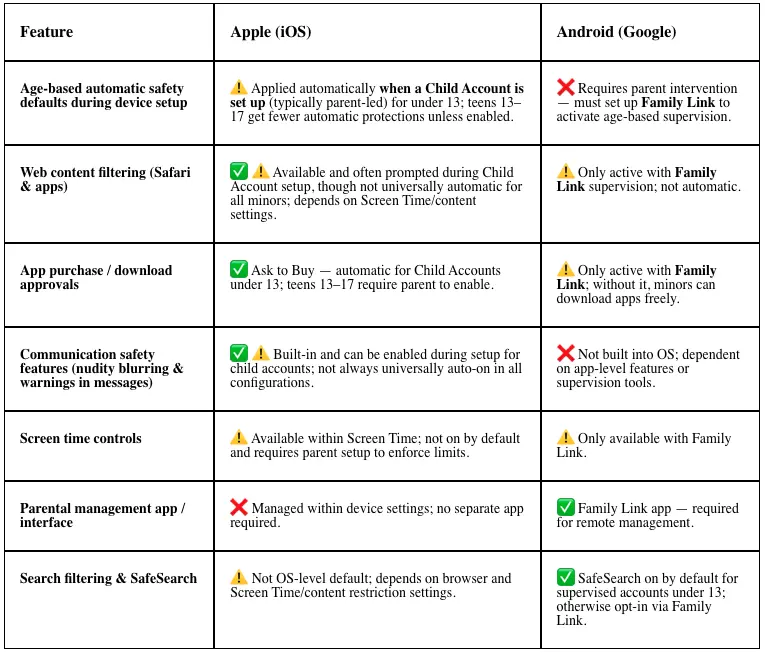
When it comes to child safety on smartphones, Android has unfortunately fallen behind Apple. Apple automatically turns on safety features when devices are being set up for minors. These protections include nudity blurring in iMessages and turning on the “limit adult websites” filter in the Safari browser for all minors ages 0-17. Apple finally implemented these changes after years of advocacy from parents, NCOSE, Protect Young Eyes, and other tech safety organizations. Now, it’s Android’s turn.
A NCOSE researcher tested Android devices and found, “An Android device used by a minor looks and behaves like a regular adult device, with no automatic content filters, app-rating restrictions, or communication protections on at setup.”
This is not to say that Apple’s child protection features are perfect. They are a solid starting point, but there is much more to be done. This presents a golden opportunity for Android, Apple’s foremost competitor. They have the chance to not only match Apple’s baseline, but surpass it. They have the chance to lead the industry in child safety and set a new standard that inspires trust in digital safety.
Why won’t they take it?
Android’s “Family Link” is not a Replacement for Built-in Safety Features
Instead of default protections for minor devices, Android uses a third-party tech management app called Family Link. This means parents must actively “opt-in” to parental controls on their kids’ devices, rather than having that protection by default. Without Family Link, the device behaves much like a standard Android device.
While Google (Android’s parent company) has rolled out some default protections, including SafeSearch and another small number of protections for minors, the most meaningful and safeguards still require parents to know about Family Link, how to set it up, and how to keep it active.
Family Link is nothing more than a cop-out for Android. It gives them the freedom to say they are protecting children through Family Link and then put the blame on parents when things go awry. In fact, parental controls are difficult for even the most tech-savvy parents to set up and maintain. And what about children who don’t have the benefit of highly-involved, tech-savvy parents? Android apparently thinks these children should be left without any protection at all.
Family Link shows us that the tools are already built into Android phones. Google simply needs to turn them on by default. With a simple flick of a switch, Google could protect ALL children using Android phones—i.e. millions of children worldwide. Why won’t they do this?
Our Requests for Improvement
While Apple phones are dominant in the United States, across the globe, Android runs on the vast majority of smartphones. Approximately, 70-75% of the world’s smartphones run on Android, including major vendors like Samsung, Motorola, Xiaomi, Oppo, and Vivo. Because Android has such a wide and diverse user base, safety changes to their operating system would prevent harm to billions of users worldwide.
Below are some of the changes NCOSE is requesting of Android:
- Android OS should adopt built-in Communications Safety features that automatically detect and blur sexually explicit images across messaging apps, video calls, and shared contact content for all minor devices.
- Ideally, these changes would prevent minors from sending nude imagery, reducing the risk of creating or distributing child sexual abuse material (CSAM).
- They should also implement OS-level web content filtering that proactively limits minors’ exposure to inappropriate content including pornography, across browsers and apps controlled or influenced by Google.