Just in time for Internet Safety Month, we’re pleased to celebrate some progress with major gatekeepers of children’s digital experiences: namely, app stores and smartphones.
This progress comes in the form of both legal and corporate victories. Tech companies are feeling the pressure from Congress and the courts, and they’re making changes!
Read on for a summary of a major legal victory on the App Store Accountability Act, as well as some recent progress with Apple and Android.
Texas Appeals Court Allows App Store Accountability Act to be Enforced
The App Store Accountability Act is a crucial piece of child protection legislation, which NCOSE assisted Melissa McKay and Joel Thayer in writing. Yet the tech industry has been striving to shut this law down, challenging it in the courts in multiple states where it was passed.
Of course, we fought back. And now, we celebrate a significant victory in Texas: an appeals court has dismissed challenges to the App Store Accountability Act, allowing it to be enforced in Texas!
In its decision, the appeals court specifically cited the Amicus brief written by the NCOSE Law Center in support of the Act. We are proud to have contributed to this notable victory.
What Does the App Store Accountability Act Do?
The App Store Accountability Act prohibits minors from downloading apps without consent of a parent or guardian, since doing so essentially requires children to sign contracts by consenting to terms and services. In the offline world, we would never let children sign binding contracts without their parents. So why are we allowing it to take place online?
The App Store Accountability Act also requires app stores to develop appropriate age ratings for apps hosted on their store. Many apps on the app stores currently have age recommendations, but they are often inaccurate and misleading to parents.
Apple Rolls Out Improvements to its App Store, Following Legislative Progress
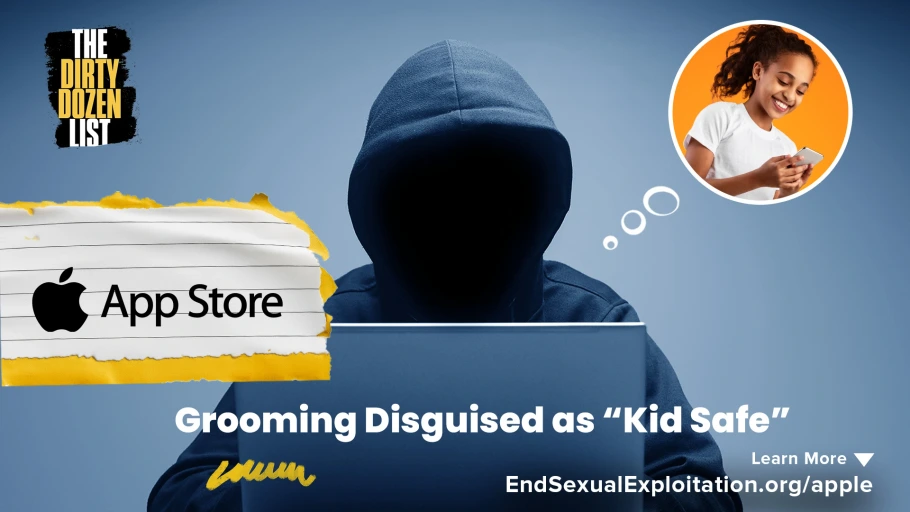
The legislative progress with the App Store Accountability Act appears to have lit a fire under Apple. They are rolling out several new changes, aimed at improving age-appropriate experiences in their app store. These changes also come afterNCOSE named the Apple App Store to our Dirty Dozen List for the third time.
Firstly, parents can now share their child’s age range with the apps they use, without disclosing their birth date or personal data. When app content restrictions are set for a child, apps with age ratings that exceed the restrictions will not appear on the App Store in Today, Games, Apps tabs, or in editorial stories.
Further, App Store product pages will now reflect when developers indicate that their apps contain user-generated content, messaging, or advertising capabilities. Note, however, that Apple does not state developers will be required to indicate this—simply that if they do, the information will be displayed on the product page.
Finally, Apple will now be offering app developers a new suite of tools that can help protect kids from seeing inappropriate content and allow parents to approve any new in-app contacts. Developers can also integrate the Declared Age Range API, which allows them to request a child’s age range. However, again, Apple does not state that developers are required to use these tools. Simply that they are available if they choose to use them.
There are still other things Apple must do before its App store is truly safe. Learn more and take action at endsexualexploitation.org/Apple.
Other Improvements to Apple’s Parental Controls
Apple has also announced several other updates to its parental controls.
“Screen Time” has been redesigned to be more intuitive, giving parents an “at a glance” view of their kids’ app and device usage, and allowing them to easily make adjustments to their kids’ access to apps and the web.
Further, when “Communication Limits” is configured in Screen Time, children must now send requests to their parents when they want to communicate with new phone numbers.
Apple also added an optional “Ask to Browse” feature, through which parents can require their children to request permission before accessing a new website in Safari. Note that this does not extend to other Internet browsers like Google Chrome or Microsoft Edge.
Finally, Apple has launched a dedicated website to help parents learn about the latest safety tools and answer common questions, such as how to set up controls. We hope that this will assist parents in navigating Apple’s various parental controls and safety settings. However, we advise parents to maintain a healthy degree of skepticism when reading all Apple’s proclamations about how safe its products are.
While NCOSE celebrates Apple’s improvements to parental controls, we maintain that tech companies must stop putting the burden on parents alone. Even for diligent parents, it is a near impossible task to keep up with the constantly expanding array of apps and their ever-changing features. Further, all children deserve protection, even if they don’t have the privilege of highly-involved, tech-savvy caregivers. This is why NCOSE will always advocate for tech companies to make their products safe by design and turn on all safety settings by default, at least for child accounts.
Android Launches Fake Call Detection
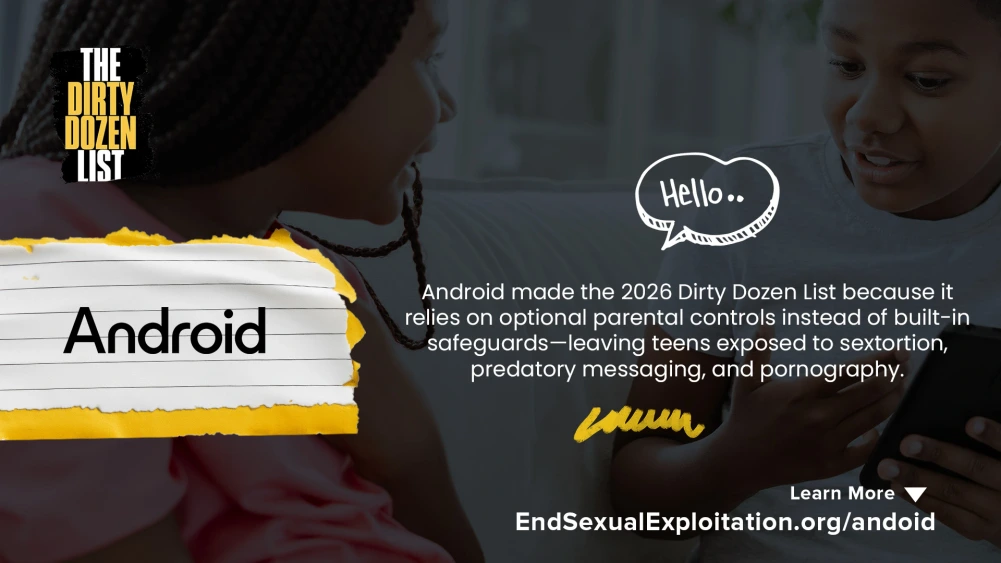
Android is also on the 2026 Dirty Dozen List for its failure to provide default child protections. In fact, they lag significantly behind Apple in this regard.
While Android has yet to implement our requested changes, they did roll out a new fake-call detection feature, in an attempt to combat extortionists manipulating kids through phone-based scams.
This is a small step in the right direction and we will keep pressing on Android to make all our recommended safety improvements! Learn more and take action at endsexualexploitation.org/Android.
Thank you so much for making all of this progress possible through your support! We look forward to embracing many more victories with you.