Annual List Also Names Major Tech Platforms and Products Sexually Exploiting Children and Adults
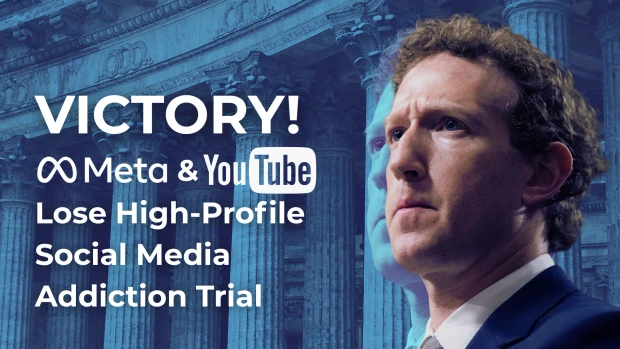
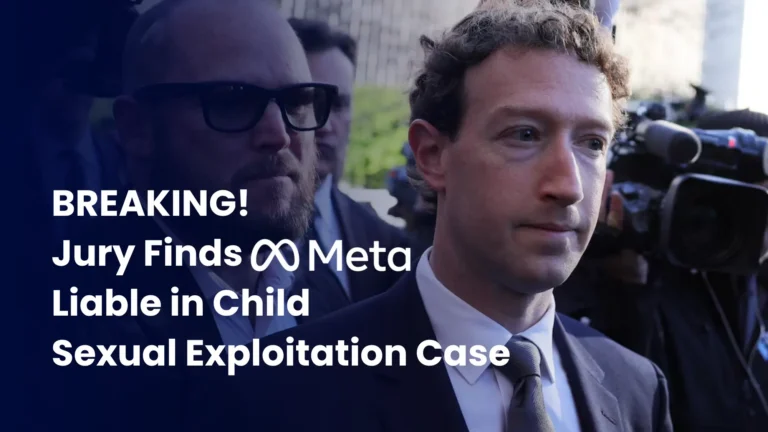
WASHINGTON, DC (March 31, 2026) – The National Center on Sexual Exploitation (NCOSE) released its 2026 Dirty Dozen List of mainstream contributors to sexual exploitation, naming its first social media founder, Meta Founder Mark Zuckerberg, to its annual list. This comes on the heels of historic legal verdicts finding that Meta enabled child sexual exploitation and was negligent for social media addiction.
Other digital platforms named include Amazon, the Apple App Store, Grok, Discord, Snapchat, Steam, Telegram, TikTok, X (formerly Twitter), and tech products Android and Google Chromebooks.
“Mark Zuckerberg is a major contributor to sexual exploitation online, through his leadership at Meta. That’s why he is named personally to the Dirty Dozen List,” said Haley McNamara, Executive Director and Chief Strategy Officer, National Center on Sexual Exploitation. “Under his leadership, Meta has consistently prioritized growth and profit over the safety of children. Facebook, Instagram, Messenger, and WhatsApp have become breeding grounds for child sexual abuse, grooming, sextortion, and sex trafficking. Responsibility lands on his desk.”
“When AI promotes child sexual abuse or sexual violence, when social media executives knowingly allow predators to reach children, when digital platforms enable image-based sexual abuse to flourish, it is time for them to be called out and exposed for the harm they are perpetuating. It’s a wake-up call for those named that the time for half-measures is over. They must take urgent action to stop contributing to rampant sexual abuse and exploitation,” McNamara said.
The Dirty Dozen List is an annual campaign calling out 12 mainstream entities for facilitating, enabling, and even profiting from sexual abuse and exploitation. (WATCH the reveal event here.)
NCOSE presents the 2026 Dirty Dozen List:
Amazon is enabling the sale of child-like sex dolls that appear to violate its own policies, endanger children, and undermine laws designed to protect minors. These products are not harmless—they are tools that normalize and escalate dangerous sexual interests, putting real children at risk. Amazon has the resources to prevent this, but continues to act only when public pressure mounts. Contact Amazon today and demand they permanently ban child-like sex dolls, enforce their policies, and implement lasting safeguards to protect children.
Android has the power to protect millions of minors worldwide with a single update. By implementing default safety features like nudity blurring and web content filtering at the OS level, Android can create a safer digital environment for children and teens. These protections are critical for minors, such as foster care or high-risk youth without the privilege of involved, tech-savvy caregivers to configure safeguards manually. Contact Android today and urge them to adopt prevention-first policies that align with real-world risks and set a new standard for child safety.
The Apple App Store lulls parents with “kid-safe” labels while exposing children to hidden online dangers. Deepfake “nudify” tools, stranger connection apps for 13-year-olds, and sex games for preschoolers have all waltzed past Apple’s supposed safeguards—showing just how easily its review system can be gamed. With 87% of U.S. teens on iPhones, Apple is the de facto gatekeeper of childhood online. And until it reins in dangerous apps, fixes deceptive age ratings, and closes loopholes in its parental controls, Apple is failing the very kids it claims to protect.
Discord – What started as a gamer chat app has become a pipeline for grooming, coercion, and sextortion. Predators lure minors from other platforms to Discord, using DMs, video calls, and private servers to escalate abuse and share child sexual abuse material. Organized sextortion networks even use Discord to recruit victims and coordinate crimes. Despite being named five times on NCOSE’s Dirty Dozen List, facing lawsuits, and testifying before lawmakers, Discord continues to rely on users to report abuse, leaving high-risk spaces largely unchecked. Promised “teen-by-default” safety settings have been delayed, raising fears that protections will be weak or symbolic. Discord must act now—fully implement teen-by-default safeguards, enforce policies proactively, and stop being a playground for sexual exploitation.
Google Chromebooks, marketed as tools for education, are failing to protect students from online harm. With default settings leaving many students with unmonitored internet access, invasive data collection, and complex safety settings, these devices expose children to predators, explicit content, and cyberbullying. Schools and parents are overwhelmed and struggle to shield their kids from these dangers. Contact Google today and demand they redesign Chromebooks with robust, default safety settings, effective parental controls, and protections against harmful content.
Grok – xAI’s Grok builds chatbots to normalize rape, sexual violence, and prostitution/sex trafficking, and image generators to create sexual imagery. This fuels a culture of entitlement and abuse. Worse yet, Grok’s “age-gate” is little more than a public relations ploy, making all of the above effectively accessible to minors. These aren’t accidents—they appear to be intentional design choices to maximize engagement and profit, regardless of the human cost. It’s time for Grok to change its tune, and innovate for humanity’s good, not exploitation.
Snapchat is a tool of choice for sextortionists, sex traffickers, and child abusers — and the company knows it. Internal documents and whistleblower accounts reveal that reports of abuse have often gone ignored, critical safety fixes were dismissed to protect engagement metrics, and features like My AI have promoted statutory rape. The technology exists to stop this, yet Snap chooses to look the other way.
Steam does nothing to protect children who don’t have the privilege of highly-involved, tech savvy caregivers enrolling them in family accounts. Any child can make a Steam account, without parental permission or age verification, and immediately have full access to all sexually explicit games.
Telegram prioritizes privacy for sexual exploiters. Telegram knows that it is a messaging app used by sexual abusers for child sexual abuse material, sex trafficking, sextortion, deepfake image-based sexual abuse, and more. Yet it continues to operate encryption without real safeguards—all in the name of ‘privacy’—disregarding victims’ privacy and human rights. Telegram has chosen a side.
TikTok is failing to protect children, allowing predators to exploit livestreams, comments, and private messages to groom and abuse minors, including trading CSAM. Internal documents reveal the company profits from features that incentivize sexual content, while online pimps use TikTok to recruit vulnerable users into pornography. Children deserve better safeguards from a platform marketed as safe for users 12 and older. Contact TikTok today and demand they implement robust safety measures, enforce meaningful protections, and prioritize child safety over profits.
X (formerly Twitter) has become the front page for sexual abuse online, amplifying exploitation instead of preventing it. Not only did the platform decide to take “no action” on child sexual abuse material, but it continues to facilitate child abuse, image-based sexual abuse, AI deepfake pornography, prostitution/sex trafficking, and more. Its policies and lack of enforcement make X a safe harbor for abusers and a nightmare for survivors.
Mark Zuckerberg says, “I’m sorry,” but his actions tell a different story. Under his leadership, Meta’s platforms—Facebook, Instagram, Messenger, and WhatsApp—have become breeding grounds for child sexual abuse, grooming, sextortion, and trafficking, prioritizing profits over safety. From algorithms recommending predators to teens, to AI chatbots engaging in sexualized conversations with minors, Zuckerberg has consistently failed to protect children while allowing abuse to thrive unchecked.
Since 2013, the Dirty Dozen List has galvanized tens of thousands of individuals to call on corporations, government agencies, and organizations to change problematic policies and practices. This campaign has yielded major victories at Google, Netflix, TikTok, Hilton Worldwide, Verizon, Walmart, U.S. Department of Defense, and more. The 2025 Dirty Dozen List highlighted 12 survivors who were denied justice in the courts because of Section 230.
About National Center on Sexual Exploitation (NCOSE)
Founded in 1962, the National Center on Sexual Exploitation (NCOSE) is the leading national non-profit organization exposing the links between all forms of sexual exploitation such as child sexual abuse, prostitution, sex trafficking and the public health harms of pornography.
To schedule an interview with NCOSE, please contact press@ncose.com.